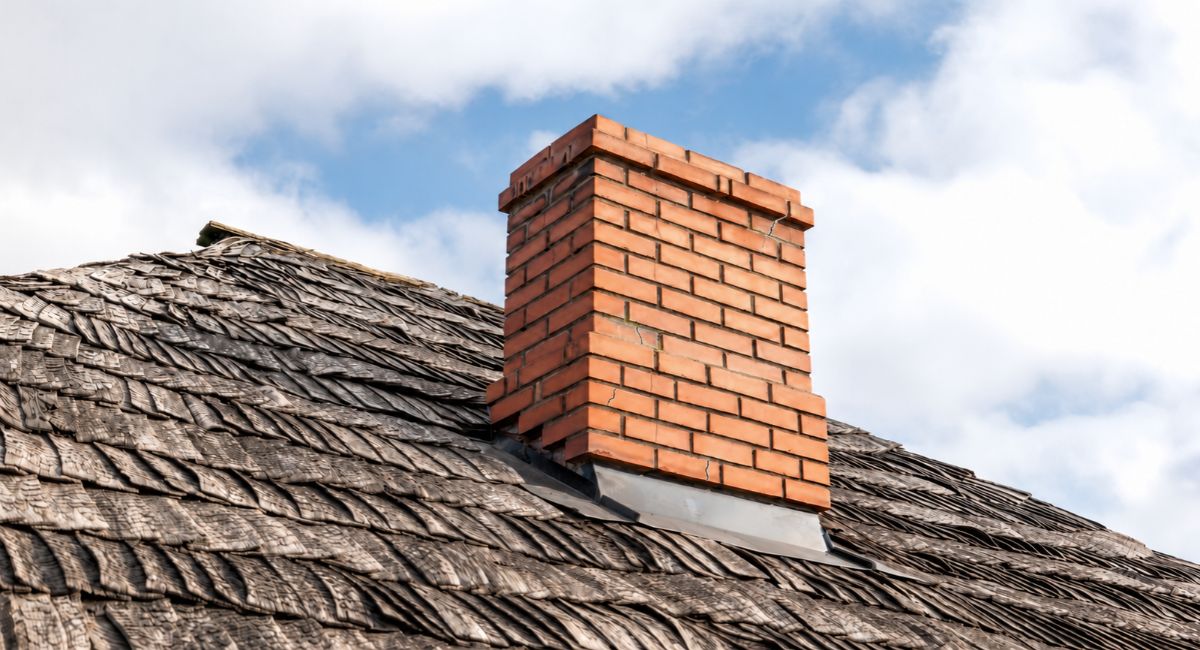
A brown stain on the ceiling next to the fireplace usually gets blamed on the roof. Sometimes that is right. Other times the flashing gets replaced, the bill gets paid, and the stain is back after the next hard rain.
I have stood under plenty of those stains with homeowners. A chimney is a brick column running straight through your roof, and it can let water in at the top, through its own walls or at the joint with the shingles.
Before you hire anybody, it helps to know which part is failing, because a roofer and a mason fix very different things.
A Chimney Can Leak From Four Different Places
Most people picture a chimney leak as a gap between brick and shingles.
That joint is only one way in. Brick and mortar soak up water much like a clay flowerpot, and whatever soaks in near the top can travel down inside the chimney until it finds a way out.
When I look at a leaking chimney, I check four areas, from the top down.
- The cap, a metal cover over the flue opening that keeps rain out of the chimney.
- The crown, the concrete slab covering the top of the brickwork around the flue.
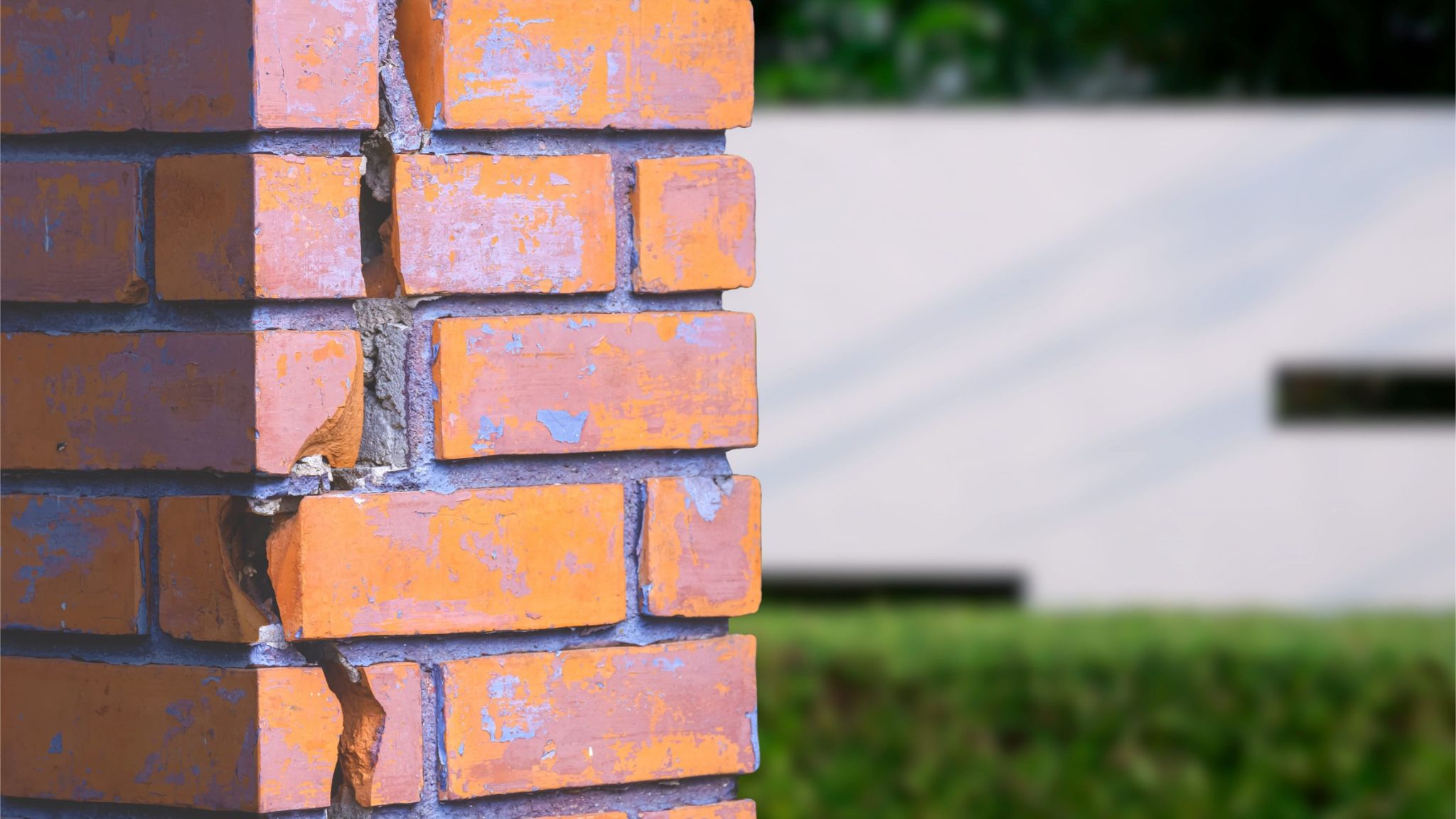
- The brick and mortar walls, which take on water through cracks, worn joints and flaking brick faces.
- The flashing and cricket, meaning the metal at the roof joint and the small peaked ridge that steers water around a wide chimney.
Only the last item is roofing work, and everything above it belongs to masonry.
Why New Flashing Cannot Fix Wet Brick
Chimney flashing comes in two layers. Step flashing is a row of L-shaped metal pieces woven in with each course of shingles along the chimney sides.
Counter flashing is set into the mortar joints and folds down over the step flashing like a lid.
Curved dormers present a similar challenge, with flashing that must follow the rounded roof and direct water away from its joints. The process of fitting a roof around a curved dormer shows why careful metalwork matters.
Both layers stop water running down the outside of the roof. Neither does anything about water that has already soaked into the brick above the roofline and runs down inside, behind the metal.
Counter flashing also depends on the mortar holding it. When those joints crumble, the metal loosens no matter how new it is.
Reflashing a chimney with rotten mortar is like hanging a new gutter on soft fascia.
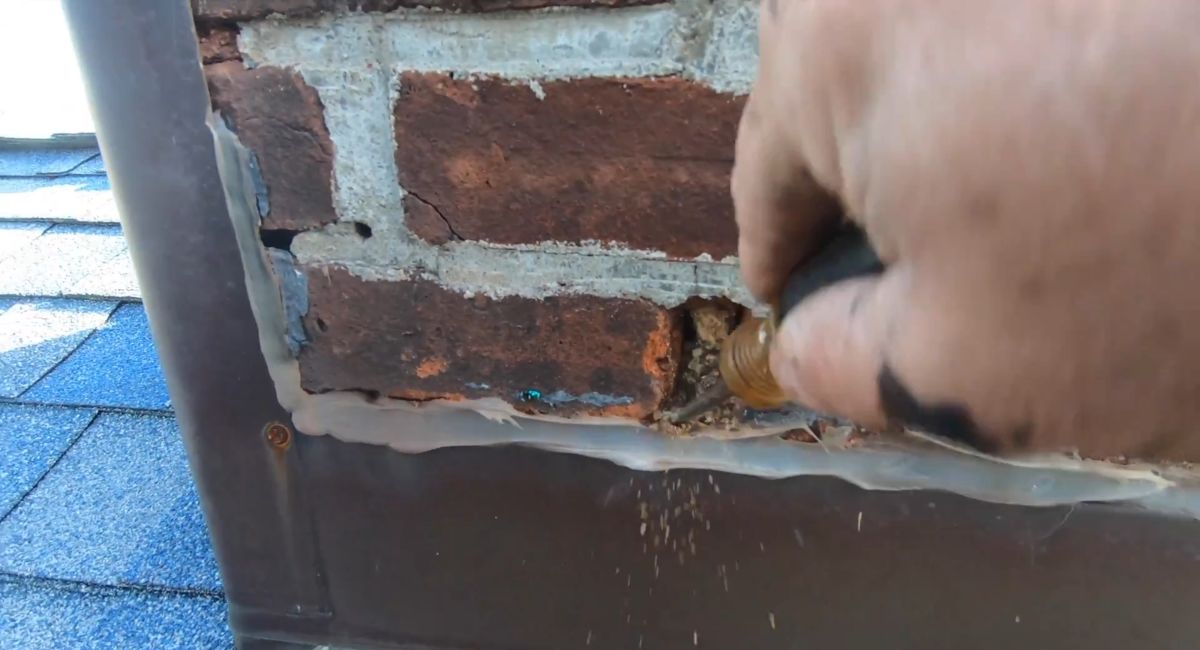
The video below shows how chimney flashing can be sealed and why relying on ordinary caulk often leads to recurring leaks. It also demonstrates one repair method, although the right solution depends on the condition of the flashing and surrounding masonry.
Code fact. Local codes based on the International Residential Code require a cricket on the uphill side of any chimney wider than 30 inches. The flashing rules published by Hopkins, Minnesota show a typical version.
Where the Water Shows Up Tells You Where to Look
Symptoms point the search in the right direction.
| What you notice | Where it often starts | Who usually fixes it |
|---|---|---|
| Drips in the firebox or a rusty damper | Missing cap or cracked crown | Chimney sweep or mason |
| Ceiling stain beside the chimney during heavy rain | Step or counter flashing | Roofer |
| Wet attic decking on the uphill side | Missing cricket or debris behind the chimney | Roofer |
| White crust or flaking brick that stays damp | Water soaking through brick and mortar | Mason |
| Damp streaks with no rain at all | Appliance exhaust condensing in the flue | HVAC contractor or chimney sweep |
The no-rain row surprises people most. Warm exhaust from a gas appliance cools inside an oversized flue, turns to water and soaks the masonry from the inside.
How I Trace a Chimney Leak Before Anyone Tears Off Shingles
A water test is slow, dull work, and nothing beats it for finding a chimney leak. The idea is to wet one part at a time, starting low, so you know which part let water in.
- One person watches the attic or the stain with a flashlight while another runs the hose.
- Soak the roof below the chimney first, then each side, for about 15 minutes per area, never spraying up under the shingles.
- Move to the uphill side, then the brick walls, and save the crown and cap for last.
- Stop when water appears inside and note which area was wet.
- Let everything dry before testing the next area.
Starting at the top ruins the test, because water poured over the crown runs past every other spot.
The hose work happens on the roof, so leave it to whoever you hire. You can be the one holding the flashlight.
Why the Masonry Usually Comes Before the Flashing
When the chimney and the roof both need work, order matters. Counter flashing sits in mortar joints, so if a mason repoints the brick after the roofer leaves, that metal gets disturbed or cut out.
Repointing means grinding out worn mortar and packing in new.
Get the crown, cap and mortar sound first, then flash into solid joints. The chimney care advice from the Chimney Safety Institute of America calls for a crown that overhangs the brick by at least 2 inches on every side so water drips clear.
The video below demonstrates how a chimney flashing joint can be sealed and why deteriorating mortar needs attention. Surface sealants may help in certain situations, but they cannot replace damaged masonry or improperly installed flashing.
Sealant smeared over a cracked crown is a shortcut, not a repair. It buys a season, maybe.
Did you know? Harder mortar is not always better. The National Park Service guide to brick masonry problems warns that mortar heavy in Portland cement is less permeable than the brick around it, which can make softer, older brick wear out faster.
What You Can Check Yourself, and What Should Stay on the Roof
I was always happier fixing things than sitting at a desk, so I understand the urge to grab a ladder.
On a chimney, the useful homeowner checks all happen from the ground or inside the house.
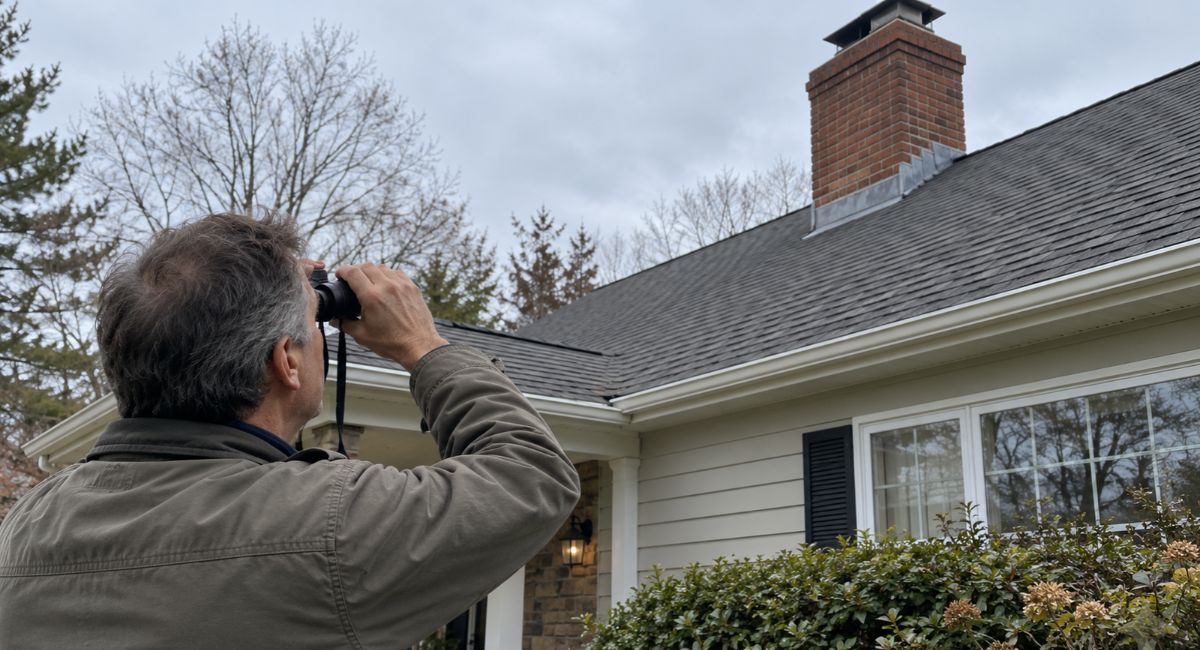
- From the driveway with binoculars, look for a missing cap, rust streaks, bent counter flashing and globs of old sealant.
- In the attic after a rain, check the decking and rafters around the chimney for dark stains or damp insulation.
- Inside, look for rust on the damper and peeling paint nearby.
Anything past that means standing beside a tall brick column on a sloped roof. Ladder falls during gutter cleaning send plenty of people to the ER, and a chimney is a worse place to lose your footing.
If your shingles are close to retirement, figuring out how old your roof really is tells you whether to reflash now or during replacement.
Ask Each Contractor Which Part They Are Fixing
Read the quotes side by side. A roofing quote should say whether the counter flashing will be cut into the mortar joints or just stuck to the brick face with sealant.
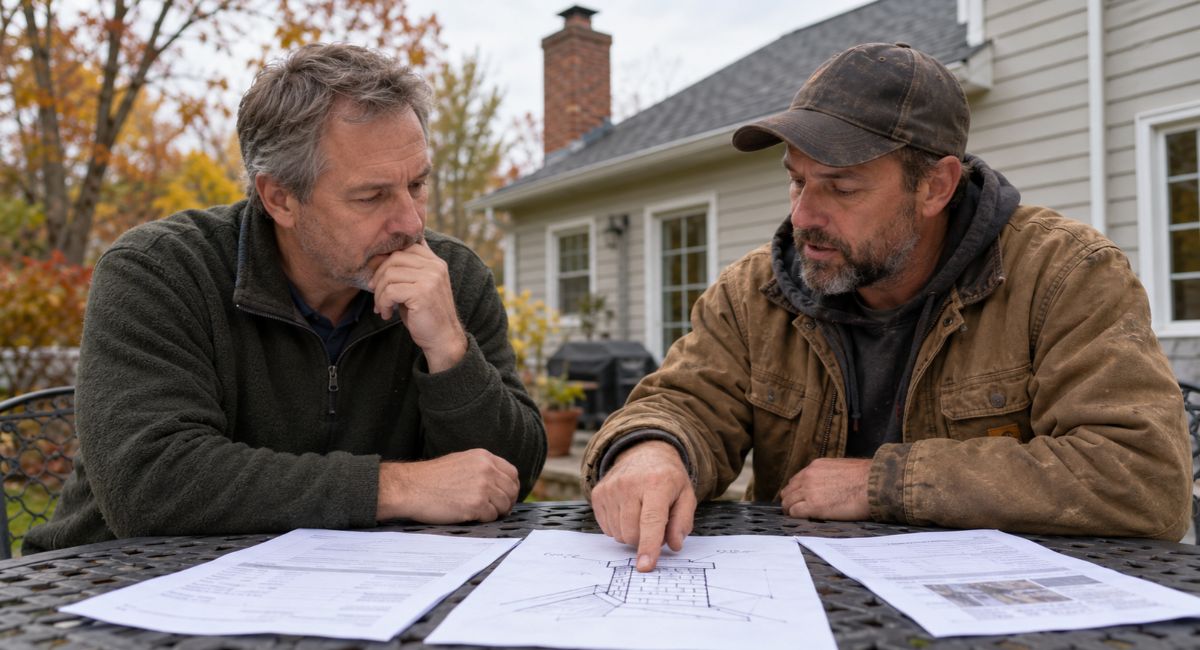
Ask whether a cricket is needed if your chimney is wider than 30 inches.
A masonry quote should cover the crown, the cap and how much mortar will be repointed. If one company does both, ask what order it plans to work in. If two companies are involved, get the mason finished first.
Keep your water test notes with those quotes, so both contractors fix the spot that actually leaked.
Questions Homeowners Usually Ask:
1. Does homeowners insurance pay for a leaking chimney?
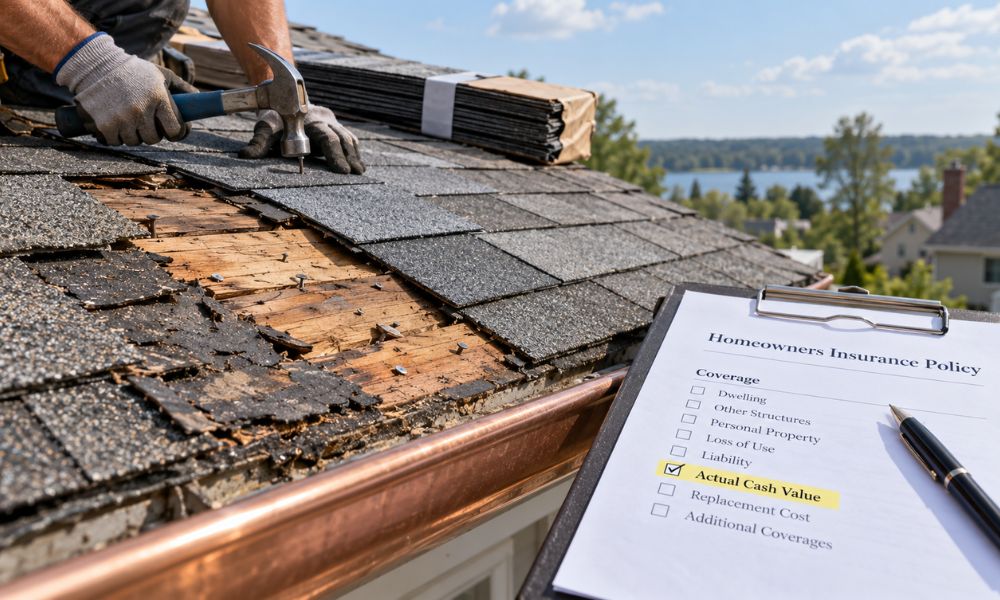
It depends on the cause and your policy. Many policies treat sudden damage, such as a falling limb cracking the crown, differently from slow wear like eroded mortar. Photograph the damage and talk to your adjuster before repairs start. Age is important too, as explained in how insurers may value an older roof.
2. Should I put a waterproof sealer on my chimney bricks?
Only after the cracks and mortar are repaired, and only a breathable, vapor-permeable masonry repellent. Paint and film-forming coatings trap moisture inside the brick, and the same CSIA guidance warns against them.
3. What if I no longer use the chimney?
An unused chimney still leaks. Taking it down below the roofline and patching the roof deck removes the flashing problem for good. Check first that no appliance vents through it, and expect a permit.
4. How often should a chimney be inspected?
The NFPA 211 fire safety standard calls for a yearly inspection of chimneys, fireplaces and vents. Early fall works well, before heating season and the first freezes.
5. Can chimney repairs be done in winter?
Flashing work can happen in cold weather if the roof is dry and safe. Masonry is different, since standards generally call for cold-weather precautions below about 40°F. A temporary cap or tarp can hold a leak until spring.

I’m Mike Carter, a roofing and gutter contractor who has spent most of my working life on roofs, up ladders and around job sites. I’ve worked with everything from asphalt shingles and metal roofing to flat roofs, flashing, fascia, gutters and drainage systems.
On Gutter N Roof, I share what I’ve learned from the years of experience, so homeowners can understand what’s happening above their heads and know when something needs attention.