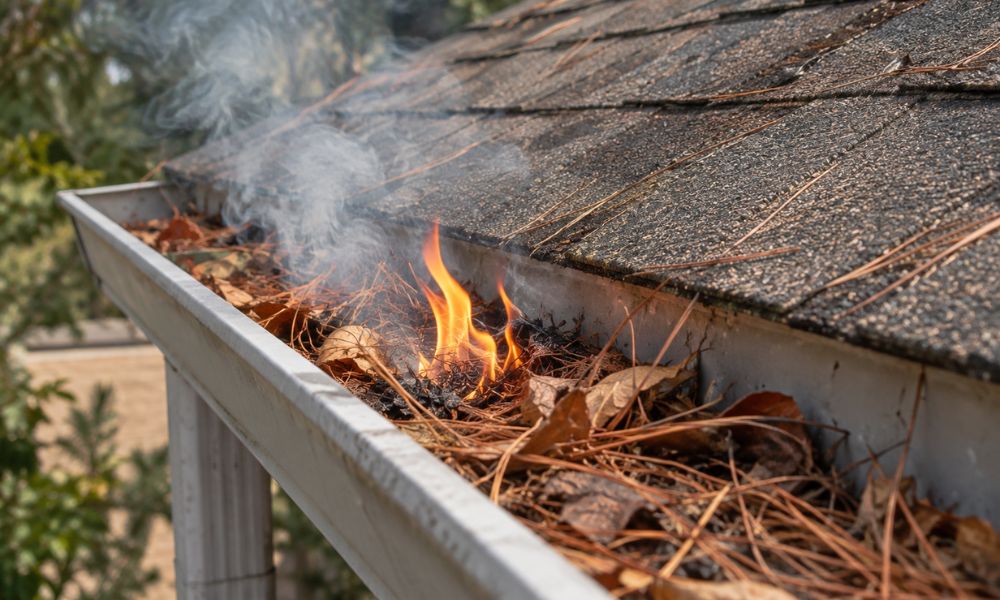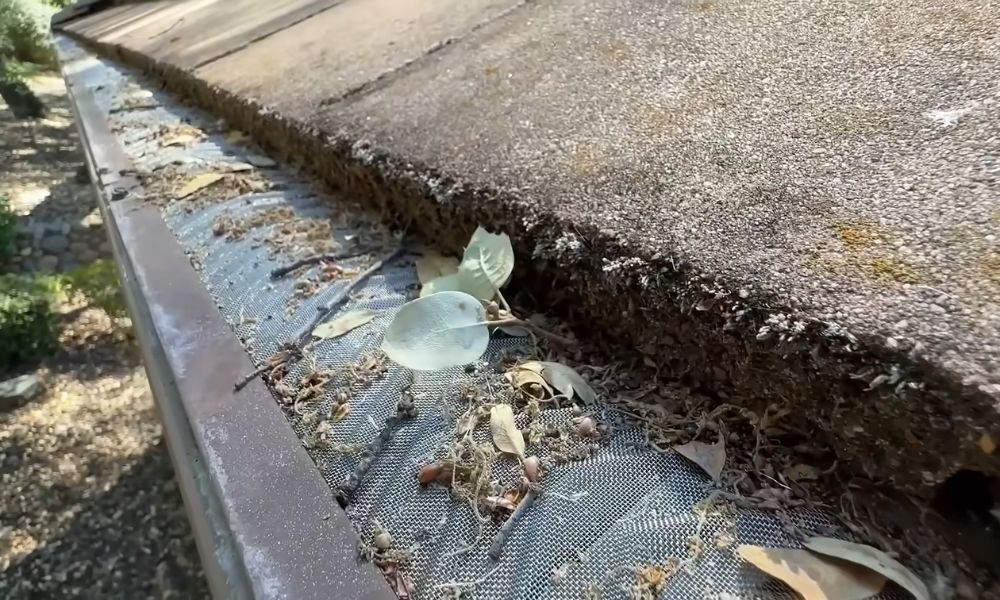
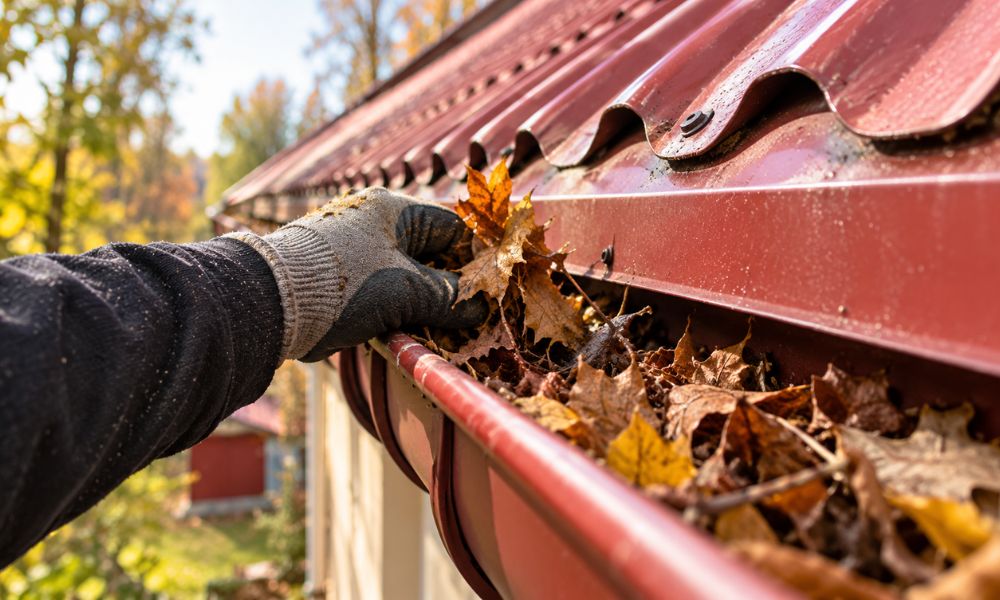
Gutter cleaning looks like one of the easiest fall jobs around a house. Pull out the leaves, flush the downspout, and put the ladder away.
The gutter isn’t what worries me. The ladder does.
A homeowner standing 10 or 15 feet above a driveway, reaching sideways into wet debris, has turned a basic maintenance job into work at height.
Every fall, people get hurt doing jobs exactly like this, and many of those injuries are serious enough for an emergency department.
The Injury Numbers Are Bigger Than Most Homeowners Expect

There is no national database that neatly separates “injured while cleaning gutters” from every other ladder accident. I wouldn’t pretend there is.
What we do have is very good data showing how much damage ladders cause.
The U.S. Consumer Product Safety Commission estimated that 273,000 injuries associated with ladders and stools were treated in hospital emergency departments in 2024.
When injuries treated elsewhere in the medical system are included, the estimate rises to 749,000 medically attended injuries.
CPSC also makes an important distinction: the product was associated with the injury and was not necessarily its direct cause, according to its 2024 injury report.
That is enough to get my attention.
An earlier national study of ladder injuries found that fractures represented 31.5% of cases, while nearly 10% of patients were hospitalized or transferred to another hospital.
Of cases where the location was known, 97.3% happened in non-occupational settings such as homes and farms. The study examined injuries from 1990 through 2005, so I would not use it as a current annual count.
It remains useful for showing what residential ladder accidents look like when they go wrong. The findings were published in a national ladder injury study.
I’ve seen enough homeowners climb ladders to understand why.
Most aren’t doing anything reckless on purpose. They are trying to save an afternoon, finish before dinner, and avoid paying somebody for a job that appears easy from the ground.
Then the ladder shifts half an inch.
Fall Gives You Several Bad Conditions at Once
Gutter season arrives when ladder conditions are getting worse.
Wet leaves end up on grass, patios, and driveways. Soil beside the house gets soft. Morning moisture stays around longer. Daylight disappears earlier. Roof surfaces collect leaves, moss, and water.
Inside the gutter, you aren’t necessarily dealing with a handful of dry maple leaves either.
I’ve pulled out gutters packed with a heavy mixture of leaves, shingle granules, mud, pine needles, acorns, and standing water. Your gloves get wet. Material falls onto the ladder. Your shoes pick up debris.
None of those things looks dramatic by itself.
Put them together while you’re 12 feet off the ground, and they matter.
| What looks harmless | What I see |
|---|---|
| Slightly uneven lawn | A ladder foot that can settle or shift |
| Wet leaves below the ladder | Poor footing when climbing down |
| “Just one more handful” | A reason to overreach |
| A gutter full of wet debris | More weight and mess than expected |
| Cloudy, damp weather | Slipperier surfaces and poorer visibility |
| A quick 30-minute job | A reason to rush setup |
I would rather spend ten minutes getting the ladder right than save ten minutes and spend the afternoon explaining to an ER doctor how I fell.
The Biggest Problem Is Usually Not the Climb
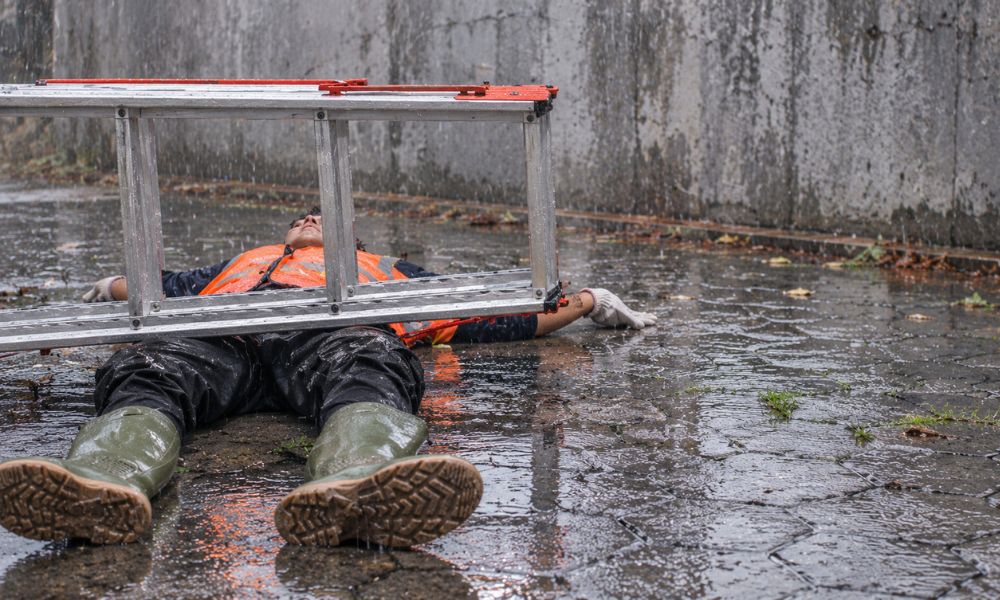
Most homeowners think about falling while climbing the ladder.
I pay more attention to what happens once they start working.
Gutter cleaning moves sideways. A ladder doesn’t.
You clean the section directly in front of you, then see another clump of leaves two feet to the left. Instead of climbing down, moving the ladder and setting it again, you lean.
Then you lean another inch.
Your hips move past the rails and your center of gravity follows them. At that point, the ladder is no longer supporting your weight the way it was a few seconds earlier.
NIOSH specifically lists overreaching, carrying objects while climbing, and applying excessive force as examples of improper ladder use in its ladder safety guidance.
My rule is boring and effective:
If I have to stretch for it, I move the ladder.
I’ve moved a ladder three feet at a time all the way around a house. It takes longer. I don’t care.
A few extra ladder setups are cheaper than a broken wrist, shoulder, or ankle.
Set the Ladder Before You Look at the Gutter
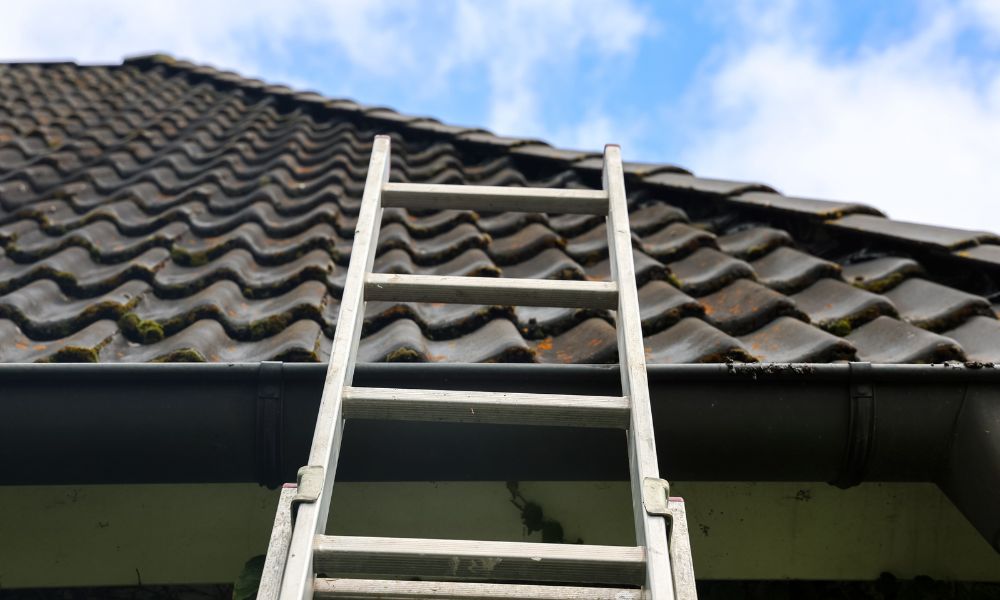
When I’m assessing a gutter job, I look down before I look up.
Where are the ladder feet going?
That tells me a lot about how the job is going to go.
One foot on concrete and another buried in landscaping is a poor setup. So is soft soil beside a recently watered flower bed. I don’t want a ladder sitting where a gate or exterior door can swing into it either.
Then I look up.
Are there electrical lines? Is the ladder contacting something solid? Am I putting pressure directly against a lightweight gutter? Is the ladder long enough for the work?
NIOSH says incorrect extension-ladder angle is involved in about 40% of cases where the ladder slides out at the base. Its guidance calls for an extension ladder angle of roughly 75 degrees.
The easy field rule is 4-to-1: for roughly every four feet of vertical height, place the base about one foot away from the supporting surface. NIOSH also explains that placement method in its extension ladder guidance.
Too steep and you create one problem.
Too flat and you create another.
Neither improves because you only plan to be up there for 20 minutes.
A Gutter Is Not a Structural Ladder Support
Here’s another thing I don’t like: leaning an extension ladder hard against the face of a thin aluminum gutter.
A gutter’s job is to collect roof runoff and move it toward the downspouts. It isn’t there to carry a person and a ladder.
You can dent the gutter, bend the front edge, pull at the hangers, or change the pitch. A small change in pitch can leave water sitting where it shouldn’t.
On suitable houses, a properly selected ladder stabilizer or standoff gives you a wider upper contact point and keeps pressure away from the gutter itself. Use equipment made for your ladder and follow its instructions.
I have seen homemade ladder solutions involving scrap lumber, foam, rope, and whatever happened to be in the garage.
I like scrap lumber.
I don’t like trusting my spine to it.
Your Hands Need to Stay Available
Gutter cleaning tempts people to climb while carrying everything they need.
Bucket in one hand. Scoop in the other. Maybe a hose over the shoulder.
Now there is very little left for climbing.
OSHA’s portable ladder guidance calls for three-point contact while climbing – two hands and one foot, or two feet and one hand – and says users should keep their body near the middle of the ladder.
It also tells users to inspect ladders before use and keep slippery material off the rungs, steps, and feet. Those recommendations appear in OSHA’s portable ladder guidance.
OSHA regulates workplace safety, so these aren’t homeowner regulations.
I still follow the same principles at a house because gravity doesn’t ask whether you’re being paid.
For a gutter job, that means I want my climbing and my cleaning treated as separate actions. Get into a stable position first. Then work.
Equipment I Would Rather Leave on the Ground
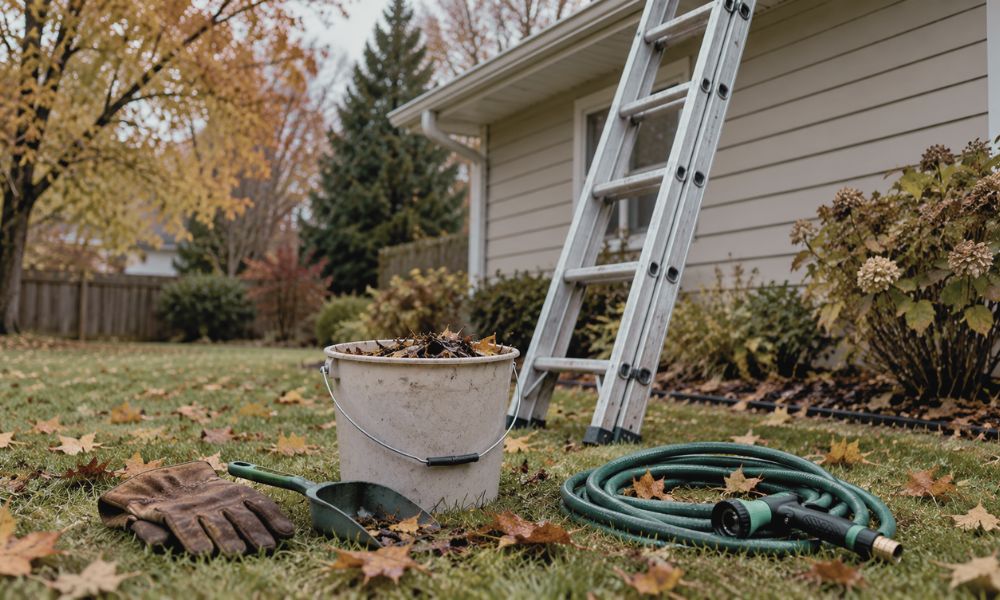
I get especially cautious when somebody wants to take larger equipment up a ladder.
A leaf blower sounds convenient. A pressure washer sounds even faster. Both give you another object to control while balancing.
A hose can snag. A power cord can pull. A blower shifts your upper body as you move it around.
For normal residential buildup, I prefer simple equipment:
- work gloves
- a small gutter scoop
- a lightweight container for debris
- a garden hose used after the bulk material is removed
Fancy equipment doesn’t automatically make a basic job safer.
Know When DIY Makes Sense
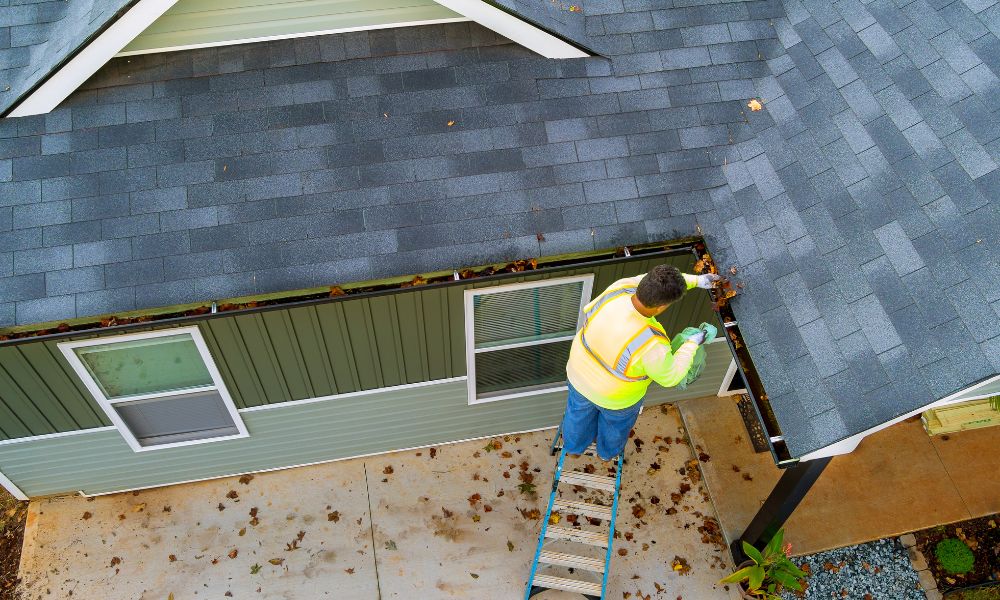
I have no problem with homeowners doing straightforward maintenance themselves.
A single-story house with firm ground, easy ladder access, and gutters that can be reached without climbing onto the roof is a reasonable DIY situation for somebody who is comfortable and competent on a ladder.
Before climbing, I would check all of this:
- The ladder is the correct type and height.
- Rails, rungs, feet, and hardware are undamaged.
- The ground is firm and level.
- Shoes and rungs are clean and dry.
- Nobody can open a door into the ladder.
- Overhead electrical hazards are clear.
- Weather conditions are dry.
- The ladder’s duty rating covers the person and equipment.
- Another adult knows you are working outside.
One item missing from that list can change my answer about doing the job that day.
When I Tell a Homeowner to Stay Off the Ladder
There is a point where gutter cleaning stops being ordinary DIY maintenance.
For me, a second-story gutter is already a very different job from one above a single-story garage. Add sloped ground below it, and I lose interest in seeing a homeowner tackle it.
I would bring in a professional when:
- access requires working from a steep roof;
- the roof or ladder area is wet;
- the ground drops away from the house;
- electrical lines restrict safe placement;
- dormers, porches or additions create awkward access;
- the gutter cannot be reached without leaning;
- the person doing the work feels nervous at height.
That last one matters.
If your legs tighten up three rungs from the top, listen to your body. The gutter does not need to be cleaned badly enough for you to prove a point.
Cleaning the Gutter Doesn’t Always Fix the Overflow
Gutter cleaning is also a useful diagnostic job.
Once the leaves are gone, I want to know what the water does.
- Does it flow toward the outlet?
- Does a section hold water?
- Is the gutter pulling away from the fascia?
- Do I see staining behind it?
- Does one roof valley dump most of its water into a tiny section?
- Is the downspout itself restricted?
I’ve been called to houses where the owner cleaned the same overflowing gutter repeatedly. The leaves weren’t the real problem. The gutter pitch was wrong, the outlet was too restrictive, or a roof valley concentrated too much water in one location.
Cleaning solves a debris problem.
It doesn’t solve a drainage-design problem.
That distinction can save you from climbing the same ladder after every hard rain.
The Job Is Never Worth Rushing
Gutters need maintenance. Clogged gutters can overflow, soak fascia, and send water where you don’t want it, and damage from skipped upkeep is rarely something your insurer will pay for.
That still doesn’t make them an emergency on a damp Saturday afternoon.
I’ve worked on roofs and ladders for years, and experience has made me more careful around them, not less. Familiarity is useful when it teaches you where things go wrong.
Set the ladder correctly. Keep your weight centered. Come down and move it instead of reaching. Leave the roof alone when it is wet. Call somebody when the access is beyond what you can safely handle.
The leaves can wait another day.
Your footing can’t.

I’m Mike Carter, a roofing and gutter contractor who has spent most of my working life on roofs, up ladders and around job sites. I’ve worked with everything from asphalt shingles and metal roofing to flat roofs, flashing, fascia, gutters and drainage systems.
On Gutter N Roof, I share what I’ve learned from the years of experience, so homeowners can understand what’s happening above their heads and know when something needs attention.