If you priced a new roof this year and the number made you sit down on the tailgate, you are not imagining things.
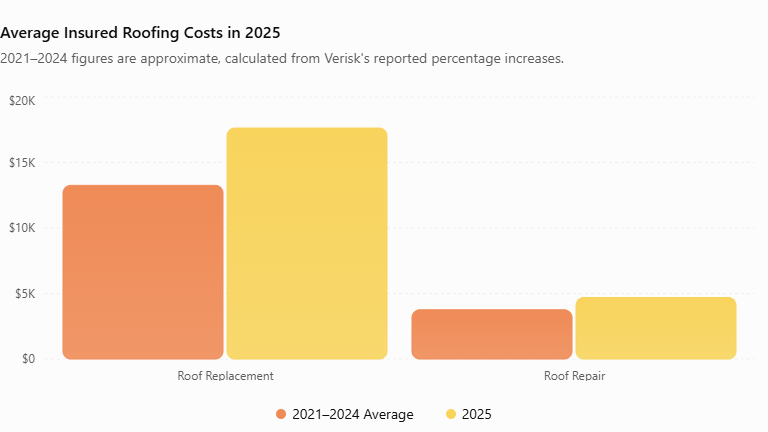
Verisk, the insurance data company, reported that the average residential roof replacement cost $17,631 in 2025. That figure sits about 33% above the average for 2021 through 2024.
Overall roof claims fell by nearly 20% over the same year, so fewer storms still produced bigger bills.
I have stood in plenty of driveways explaining a roof quote to someone who felt ambushed by it. So let me walk through what the report says, what it leaves out and what you can do with it.
What the Verisk Report Actually Says
Verisk released its 2026 U.S. Roof Report on May 29, 2026, covering roof losses through 2025.
The company builds tools for property insurers, so its numbers describe insured roof work, not every cash job in the country.
| Measure | 2025 figure | How Verisk compared it |
|---|---|---|
| Average roof replacement | $17,631 | About 33% above the 2021 to 2024 average |
| Average roof repair | $4,699 | About 25% above the 2021 to 2024 average |
| Overall claims volume | Not stated as a count | Down nearly 20% |
| Replacement cost value of residential roof losses | $23 billion | Versus a $24.4 billion average for 2021 to 2024 |
| Roofing material prices | Up 1.48% | Change during 2025 |
| Roofer labor costs | Up 0.79% | Change during 2025 |
Spectrum News reports on rising roofing costs, with contractors citing petroleum-based materials and supply expenses as contributing factors.
View this post on Instagram
Look hard at the last two rows. Materials and labor barely moved in 2025, yet the average replacement landed a third above the baseline. Something bigger than one bad year is behind it.
Why the 33% Figure Needs a Second Look
Some coverage has described the increase as a 33% jump, which reads like prices leaping a third in twelve months. Verisk did not say that. It compared 2025 with the average of the four years before it.
My own back calculation. If $17,631 is about 33% above the 2021 to 2024 average, that average works out to roughly $13,250 per replacement. Verisk rounded its percentage, so treat the result as approximate.
Because the baseline reaches back to 2021, the gap of roughly $4,400 reflects several years of climbing prices. That distinction matters when you are sitting across from a salesman.
If someone tells you roofs went up a third since last spring and you had better sign today, the Verisk data does not back that up. Prices did rise, and they have kept rising in 2026. They just did not rise that fast in one year.
How Costs Climbed While Claims Dropped
Verisk tied the lower claim count mainly to a quiet hurricane landfall season, not to roofs holding up better. Other forces pushed the average up.
- Hail spread out. Severe hail, meaning stones 1 inch across or larger, hit more than 20% of roofs in 16 states, up from 12 in 2024. Arkansas, Kansas, Nebraska, Oklahoma and South Dakota ranked highest.
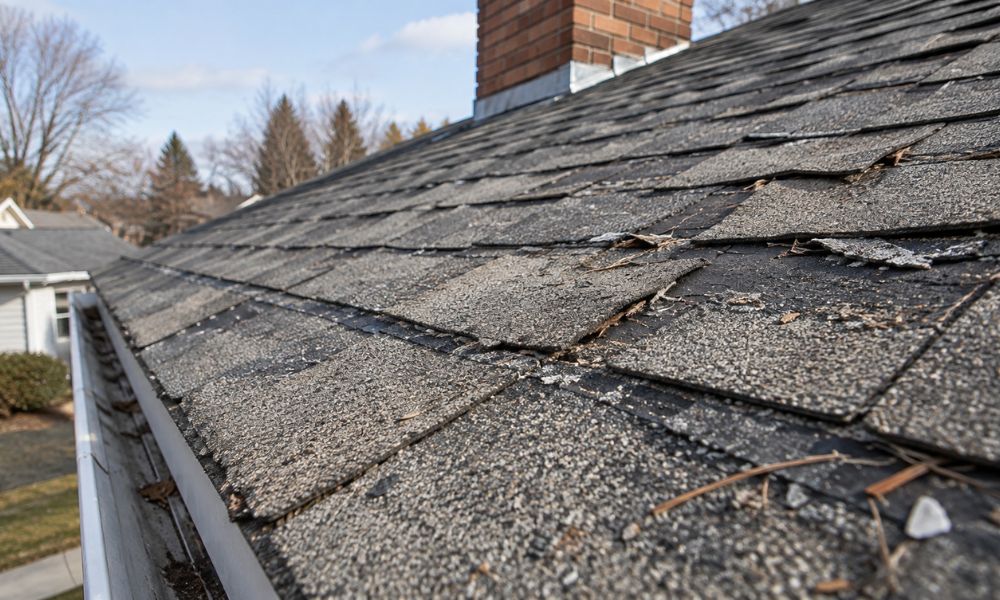
- Worn roofs cost more to fix. About 38% of U.S. homes had roofs in moderate to poor condition, and those carried roughly 60% higher loss costs.
- Small storms add up. Verisk pointed to repeated mid-size hail events, not only one monster storm.
- Materials outran labor. Material prices rose nearly twice as fast as roofer wages in 2025.
In my view, a hail-beaten roof usually needs replacing, while wind damage often needs only a repair. More replacements in the mix push the average up, even with fewer claims.
What Federal Price Data Adds
Verisk did not explain its full method in the free summaries, so I checked a public source too.
The Bureau of Labor Statistics tracks wholesale prices for asphalt roofing products, and the St. Louis Fed publishes the producer price index for prepared asphalt and tar roofing and siding products.
| Month | Index value | Change |
|---|---|---|
| January 2021 | 232.4 | Starting point |
| January 2025 | 319.8 | Up about 38% from January 2021 |
| December 2025 | 322.8 | Up about 1% from January 2025 |
| August 2026 | 340.2 | Up about 5% from December 2025 |
Most of the wholesale climb happened before 2025. Using the four January readings from 2021 through 2024 as a rough stand-in for the baseline, December 2025 sits about 15% higher.
Asphalt products alone explain only part of the 33%, so the rest likely comes from labor, accessories, roof size and the damage mix. Recent monthly readings can still be revised.
Roofing professionals discuss how tariffs and rising material costs affect roof replacement prices.
Roof Prices and Roof Ages Vary a Lot by Region
National averages hide big local swings. Verisk found roofing material costs rose 10.37% in Nevada during 2025 and fell 15.80% in New Hampshire.
Roof age varies just as much from region to region.
In the South, 28% of roofs are four years old or younger, which Roofing Contractor linked to storm turnover and fast housing growth. In the Northeast, 18% of roofs are more than 30 years old, and the Midwest is close behind at 17%.
Did you know? In states Verisk classifies as hail states, 57% of residential roofs are nine years old or newer. Everywhere else, the share is 38%. Hail keeps resetting the clock.
When I look at a roof, age is the first thing I want to pin down. If nobody kept the paperwork, there are practical ways to find out how old your roof is before you call anyone.
Repair Costs Rose Too, So Rethink the Old Math
The average repair rose about 25% to $4,699. I am not somebody who thinks every roof needs replacing, and a higher repair price does not change that. It changes the comparison you have to make.
A $4,700 repair on a roof with plenty of life left is money well spent. The same repair on a roof near the end is a down payment on a replacement you will buy anyway. Verisk estimates that about 29% of U.S. homes with asphalt shingles have less than four years of useful roof life left.
So ask what a repair fixes and what it leaves alone. A patch laid over a soft deck, or a bead of sealant where the flashing failed, only buys time.
Flashing is the metal that seals joints around chimneys, walls and valleys, and it deserves a real fix.
Van Martin Roofing explains how roofing materials, roof size and installation requirements influence the cost of a new roof in 2026.
What the Numbers Mean for Your Insurance
Insurers read the same report. Verisk executive Ryan D’Amario described roof condition as a core underwriting signal, meaning it shapes coverage and pricing.
The same Verisk analysis found that nearly 20% of roof claims involved depreciation the homeowner could not recover.
That happens when a policy pays actual cash value, meaning the value left after wear, instead of the full replacement cost. An older roof can end up worth only a fraction to your insurer.
- Find the roof settlement terms on your declarations page or roof endorsement.
- Ask your agent whether a newer or impact-rated roof lowers your premium.
- Ask about FORTIFIED construction. Verisk reports 55% to 74% lower loss frequency for FORTIFIED homes, and several states plan to launch or expand grant programs in 2026.
I cannot tell you what your policy covers. Your policy language and your adjuster settle that.
How to Price a Roof Without Getting Rushed
Quotes for one house can land far apart. A New Port Richey, Florida, homeowner featured by Tampa Bay 28 in September collected estimates from about $15,000 to $36,000.
Local roofers blamed materials, transportation, tariffs and petroleum prices.
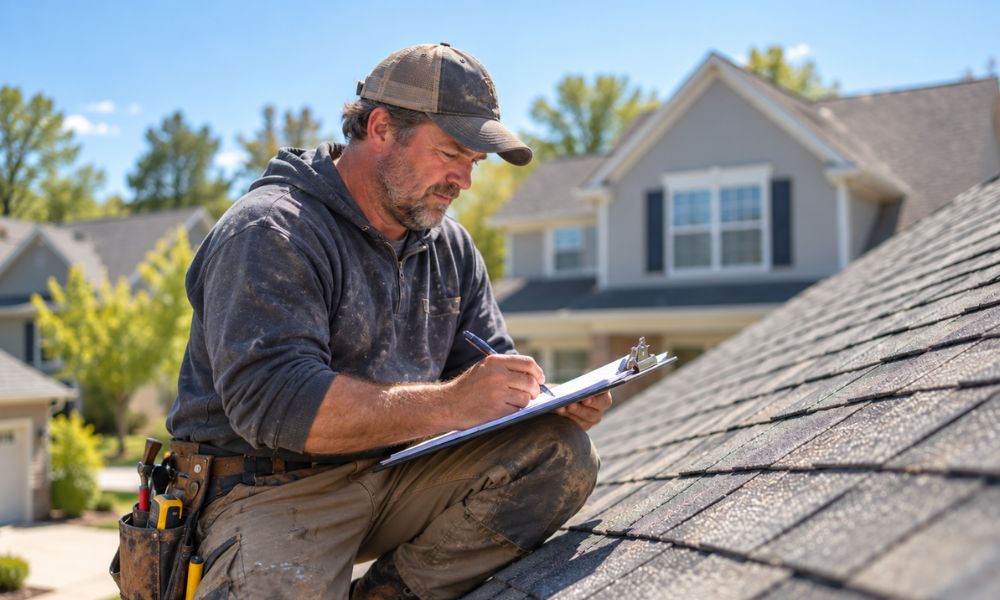
- Get three written quotes listing the same items, including tear-off, deck repair priced per sheet, underlayment, drip edge, flashing and ventilation.
- Ask what gets replaced and what gets reused. Old flashing left under new shingles is a common shortcut.
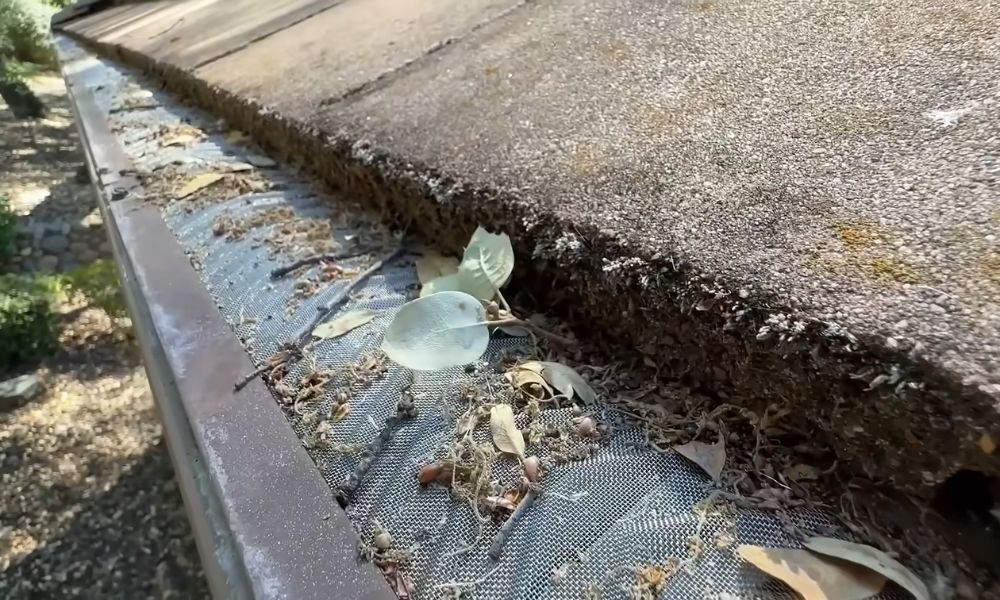
- Decide on gutters with the roof. Sound, properly sized gutters can stay. Sagging ones are easier to replace while the crew works the eaves.
- Treat talk of a 33% jump since last year as a sales line.
- Check the roof from the ground with binoculars instead of a ladder.
Underlayment is the protective layer under the shingles. Drip edge is the metal strip that steers water into the gutter instead of behind it.
What To Do Before Calling a Roofer
The Verisk numbers are not a reason to rush into a new roof, and they are not a reason to ignore one that is failing.
Prices in its data rose over several years, and federal figures show asphalt products still climbing through August 2026.
Before the first contractor shows up, pin down the roof age, pull out your policy and read the roof section, and walk the house with binoculars after the next hard rain.
Write down what you see. Then, when a quote comes in a third higher than a 2021 job next door, you will know that roughly matches the data, and which line items to question.

I’m Mike Carter, a roofing and gutter contractor who has spent most of my working life on roofs, up ladders and around job sites. I’ve worked with everything from asphalt shingles and metal roofing to flat roofs, flashing, fascia, gutters and drainage systems.
On Gutter N Roof, I share what I’ve learned from the years of experience, so homeowners can understand what’s happening above their heads and know when something needs attention.