The question usually comes while we are standing in the driveway. A homeowner points at the gutter and asks whether those guards from TV ads are worth it.
Before answering, I look past the gutter and up into whatever hangs over the roof.
A white pine, a red oak and a silver maple each fill a gutter in their own way, and a guard that copes with one can choke on another.
Some houses with no trees barely need a guard. Others sit under enough canopy that hand cleaning becomes a ladder trip every few weeks each fall, and that is where a good guard starts earning its keep.
Seeing how gutter guards perform in practice can help explain why the right choice depends on more than the product itself. The type of debris falling from nearby trees matters just as much.
View this post on Instagram
Four Things That Decide Whether Your House Needs Gutter Guards
Years of pulling debris out of gutters taught me that the trough only tells half the story.
The other half is overhead, in how close the branches reach and where the roof funnels what falls.
When someone asks me about guards, I check a few things before talking about any product.
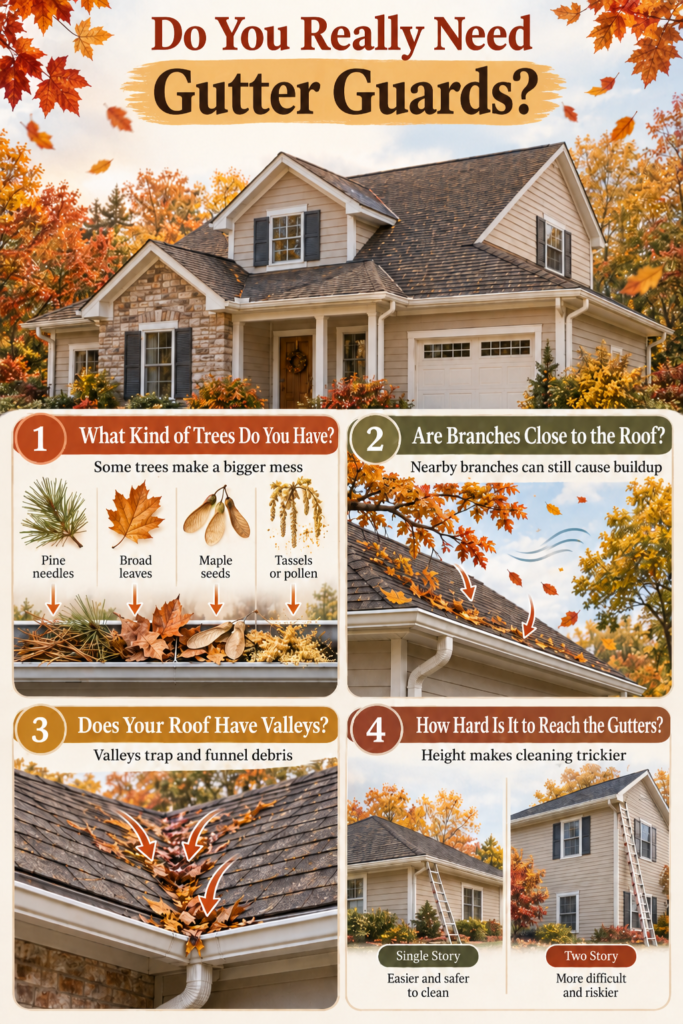
A one-story ranch with a single maple out front is a very different call from a two-story house tucked into a stand of pines.
Each Tree Drops a Different Kind of Trouble
Trees do not shed on one schedule, and they do not shed the same material.
Here is roughly how the common ones load a gutter.
| Tree | What comes down | What it does in an open gutter | Guard that usually copes |
|---|---|---|---|
| Pines | Needles, heaviest in autumn, plus cones | Knits into a mat that holds water | Fine stainless micro-mesh |
| Oaks | Leaves in fall, tassels in spring, acorns | Wet leaves pack solid around outlets | Micro-mesh or sturdy perforated metal |
| Maples | Broad leaves, winged seeds | Seeds sprout in wet debris | Most quality metal guards |
| Few or none | Shingle grit, dust, a stray leaf | Grit settles near outlets | Often no guard needed |
Pine Needles Are Where Cheap Guards Fail
Pine needles are thin, stiff and long enough to slide through the openings of a standard screen.
Once a few get through, they catch the next ones, and soon the gutter holds a woven mat under a guard that looks fine from the ground.
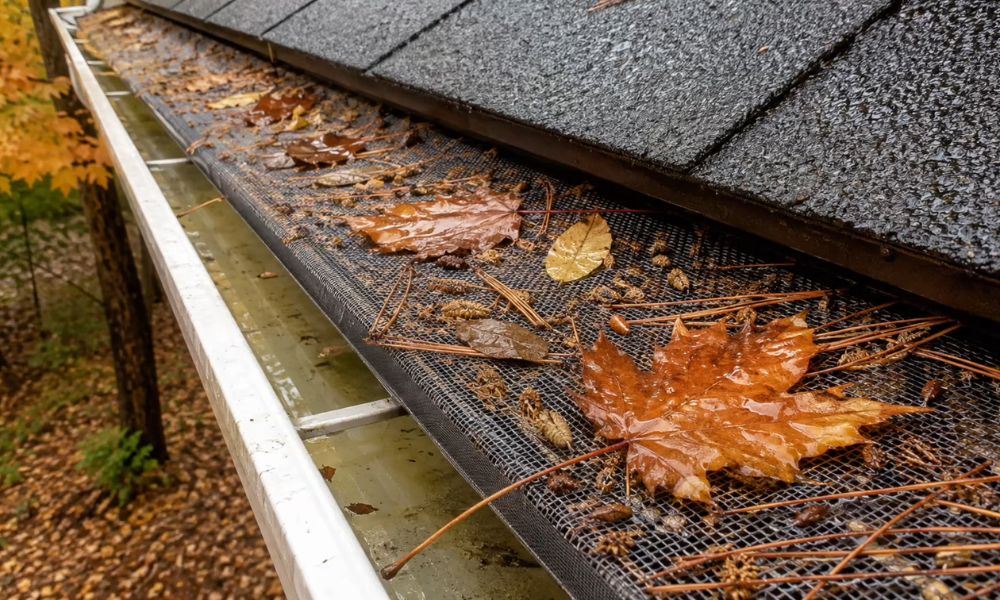
I once spent most of an afternoon cutting a plastic screen off a gutter with tin snips because needles had threaded through it so thoroughly it would not lift out in one piece.
The owner had bought that screen to avoid exactly that kind of job.
Did you know? White pine and arborvitae shed all of the needles from the previous year at once in autumn, according to the seasonal needle loss guide from Iowa State University Extension. A pine that looks browner than usual in October is often healthy and simply loading your gutter.
Big Leaves and Maple Seeds Need a Different Approach
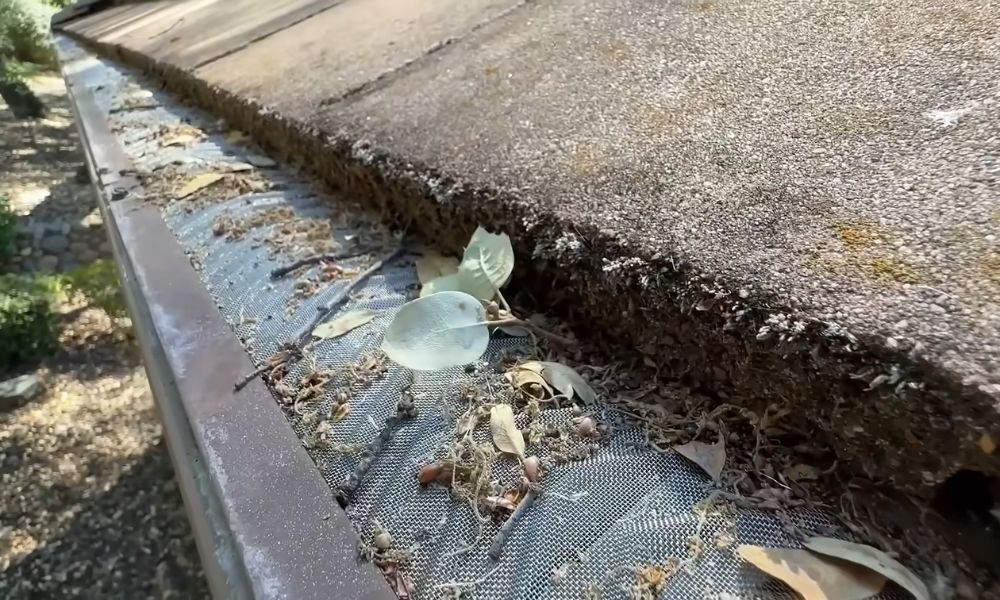
Broad leaves are easier on a guard than needles. A dry oak or maple leaf usually sits on top of mesh or a solid hood until wind moves it along.
Trouble starts when leaves arrive wet and in volume. A soaked layer can lie flat across a guard like a tarp, and rain runs over it and off the edge.
Valleys under big trees are where I see that most.
Maple seeds cause a separate headache in open gutters. Left in wet debris, they sprout, and my wife has learned to tune me out when I point at a row of tiny maples growing along a roofline we drive past.
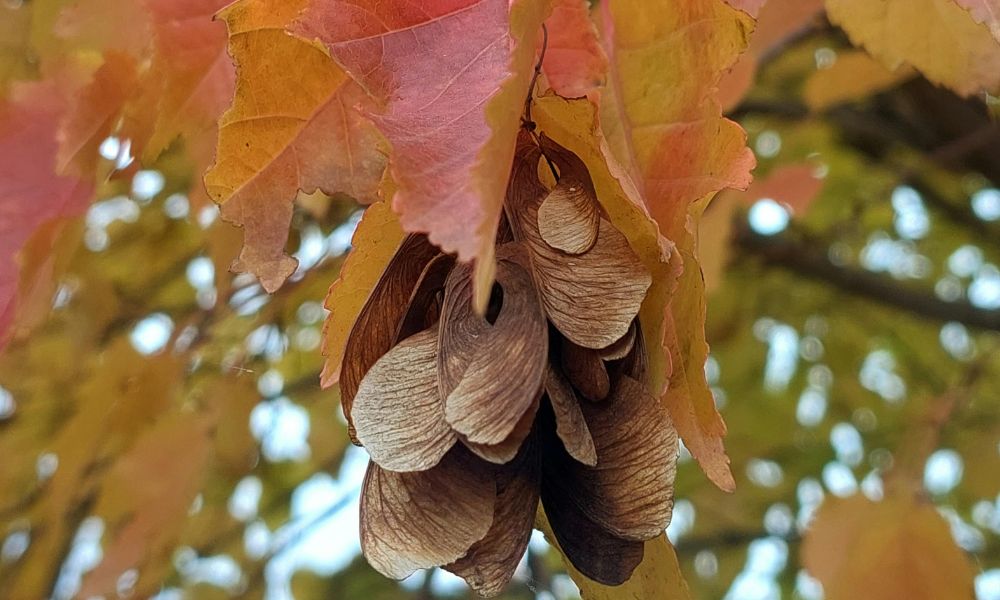
She once said those seedlings looked healthier than anything in our flower beds, which was hard to argue with.
When the Guard Is Not the Real Problem
Plenty of overflowing gutters get blamed on leaves when debris is only part of the story.
A guard keeps material out, but it cannot change how water moves once it is inside.
Before guards go on, I look for problems a guard would simply hide.
- A gutter pitched the wrong way, so water sits instead of moving toward the outlet.
- Sections sagging or pulling away from the fascia board behind them.
- A gutter too small for the roof area draining into it.
- A valley pouring more water into one corner than the gutter can carry.
- Downspouts already packed with debris further down.
Putting a guard over any of those locks the problem in and makes the next repair harder to reach. Fix the gutter first, then decide whether it needs a cover.
How a Guard Attaches Can Affect Your Roof
Some guards clip to the front lip of the gutter. Others slide under the first row of shingles or get screwed through them, and that difference matters more than sales pitches admit.
GAF, a major shingle maker, advises against installations that drive fasteners through shingles, remove and replace shingles, or go under the underlayment, in its technical bulletin on gutter covers and shingles. The same bulletin says the shingle warranty does not cover gutter covers or damage from installing them.
The way a gutter guard sits against the shingles can make a difference in where rainwater ends up. In this video, Grand Roofing Inc. shows how a guard installed beneath the shingles can raise the roof edge and redirect water toward vulnerable seams instead of the gutter.
@grand.roofing.inc The worst gutter guards! #Gutters #GutterGuards ♬ original sound – Grand Roofing Inc
Under the FORTIFIED program from the Insurance Institute for Business and Home Safety, leaf guards inserted under the shingle or starter strip leave a roof eligible only for the Existing Roof designation, according to the 2023 FORTIFIED technical bulletin on leaf guards and gutters.
Insurers already value an older roof at a fraction of its cost, so ask how a guard attaches before it goes on.
No Guard Is Maintenance Free
Guards cut down on cleaning, but they do not end it. The Wildfire Strong fact sheet on gutters from the Federal Alliance for Safe Homes recommends metal leaf guards, yet still warns they “may not prevent all debris from accumulating” and tells owners to clear what rests on top.
Robert from French Drain Man has seen plenty of gutter protection systems fail in the field. In this video, he explains why some guards struggle during heavy rain and why keeping debris out of the gutter does not always mean keeping water flowing.
Under heavy trees, I expect a light brushing or rinse now and then, plus a look after big storms. I have seen oak tassels and seed fluff coat a fine mesh until rain beaded up and rolled off the front.
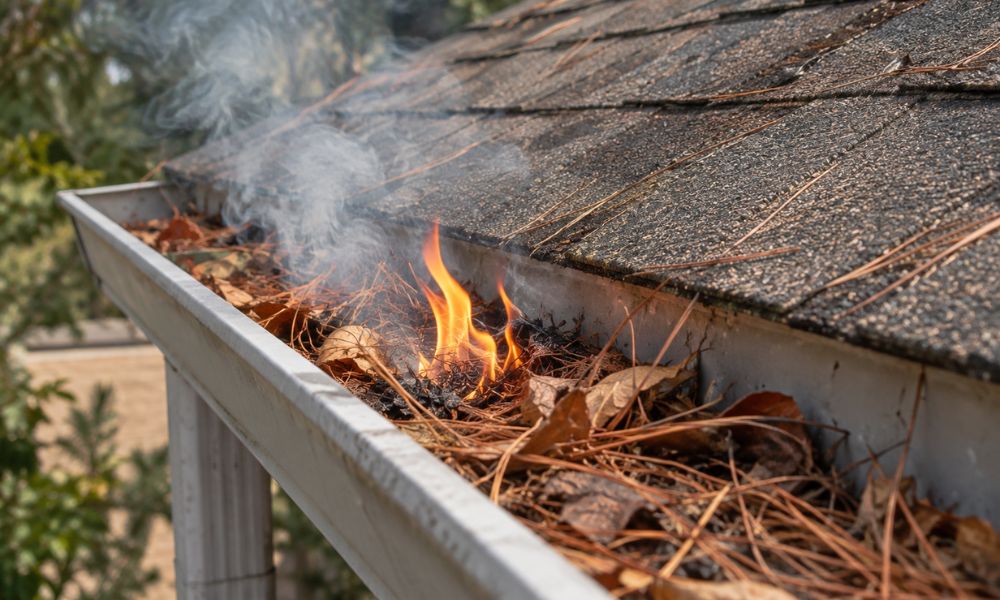
Where pines grow in dry country, metal is the only kind I would consider. Plastic and foam give wildfire embers landing in a gutter one more thing to burn, and dry needles already supply plenty.
Running the Numbers for Your Own House
Whether a guard is worth it comes down to what cleaning costs you now, in money and in risk. Work it out in three steps.
- Count how many times a year your gutters truly need cleaning under those trees.
- Multiply that by what a cleaning crew charges you.
- Divide the installed quote for a metal guard by that yearly figure.
As a made-up example, a $2,000 quote against four $150 cleanings a year pays back in about three and a third years. With one cleaning a year, payback stretches past thirteen years.
Ladder risk belongs in that math too. A CDC report on work-related ladder falls in 2011 found nearly 90 percent of injuries treated in emergency departments came from falls under 16 feet.
One-story gutters sit well inside that range, and gutter cleaning sends homeowners to the ER every fall.
Where I Land on Gutter Guards
If no branches reach your roof and you can clean a one-story gutter from a short, steady ladder twice a year, I would usually keep the money.
Under pines, oaks or a mix, especially on a two-story house, a well-installed metal micro-mesh guard is often worth it.
Before calling anyone, pull a handful of whatever sits in your gutter and look at it closely. Needles, seeds, tassels or leaves will tell you which guard to ask about.
Then ask each installer how the guard attaches and whether they checked the pitch and downspouts first.

I’m Mike Carter, a roofing and gutter contractor who has spent most of my working life on roofs, up ladders and around job sites. I’ve worked with everything from asphalt shingles and metal roofing to flat roofs, flashing, fascia, gutters and drainage systems.
On Gutter N Roof, I share what I’ve learned from the years of experience, so homeowners can understand what’s happening above their heads and know when something needs attention.