My wife and I can’t drive through a neighborhood after a storm without me pointing at something. “That downspout shouldn’t end there,”
I’ll say, and she’ll remind me that nobody asked. She’s right, but the downspout is usually still wrong. It stops a foot from the wall and dumps the roof’s water where the house needs it least.
So, are gutter extensions worth it? For most houses, yes. They’re one of the cheapest drainage fixes you can buy, and you can put most of them on from the ground.
They also come with a few problems people don’t hear about until the mower finds one.
What You Get, What You Pay and What Goes Wrong
Here’s the short version on gutter extensions. Each column matches a section further down.
| Gutter Extension Benefits | Gutter Extension Costs | Common Gutter Extension Problems |
|---|---|---|
| Drier soil by the foundation | $2 to $17 for a basic extension | Trips people and gets hit by mowers |
| Less erosion in flower beds | $6 to $85 for a splash block | Flexible tube clogs with leaves |
| Less mud splashing onto siding | $10 to $50 per downspout on a gutter job | Freezes in cold climates |
| A cheap test for a damp basement | About $95 to $255 for a 15-foot buried line | Loses its slope or gets knocked loose |
Most of those problems come from placement or attachment, and a screw, a splash block or a better path for the water fixes them.
Gutter Extensions and Downspout Extensions Are the Same Part
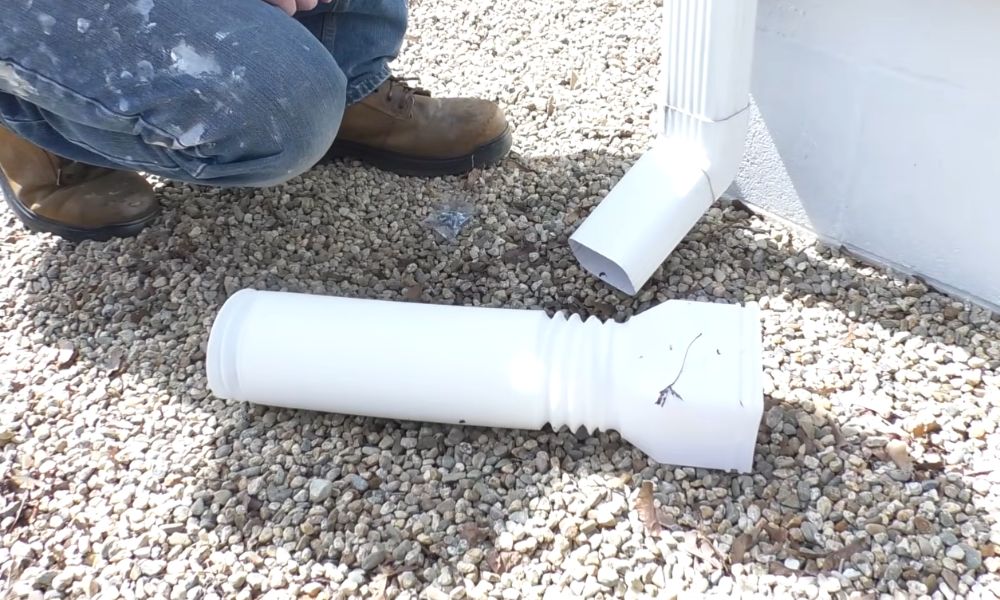
The store aisle and the internet don’t agree on names. A gutter extension and a downspout extension are the same part.
It’s the piece that attaches to the bottom of the downspout and carries water farther out into the yard.
Which name you hear depends mostly on where you live. Plenty of homeowners say gutter extension because the whole system is “the gutters” to them.
Contractors and hardware stores lean toward downspout extension or extender. In parts of the Northeast, downspouts are called leaders, and in Canada the gutter itself is often an eavestrough.
How Much Water Lands Next to Your Foundation
Most downspouts end with an elbow that kicks water out a foot or so from the wall. That sounds harmless until you work out how much water comes down the pipe.
The USGS figures that a 1-inch rainstorm drops 27,154 gallons on an acre. Divide by the 43,560 square feet in an acre and you get about 0.62 gallon per square foot. Here’s my own rough math for a 2,000-square-foot roof footprint. It sheds about 1,250 gallons in a 1-inch rain, so with four downspouts sharing evenly, each one dumps around 310 gallons by the wall. That’s more than five 55-gallon drums.
They rarely share evenly. A valley, the inside corner where two roof slopes meet, can funnel a big part of the roof into one gutter run, so one downspout ends up doing most of the work.
How Far the Water Should Go
Contractor sites will tell you anything from 4 to 10 feet. I’d rather go by codes and government guidance, and on this question they mostly agree.
The Department of Energy’s guidance on gutters and downspouts puts the outlet at least 5 feet from the foundation, or 10 feet if the water is piped underground. The International Residential Code sets the same 5 feet in its roof drainage section, but only where the soil is known to swell or collapse when wet.
The ground matters as much as the pipe. The code’s grading rule, laid out in a Lawrence, Kansas, building handout, wants the soil to drop 6 inches over the first 10 feet.
Some cities go further, and Portland’s downspout rules keep water 6 feet from a basement and 5 feet from a neighbor’s property line. Codes apply only where adopted, so check with your local building department.
What Gutter Extensions Actually Do for You
An extension moves water, and that’s all it does.
It helps with the trouble that starts when the same soil by the wall gets soaked storm after storm.
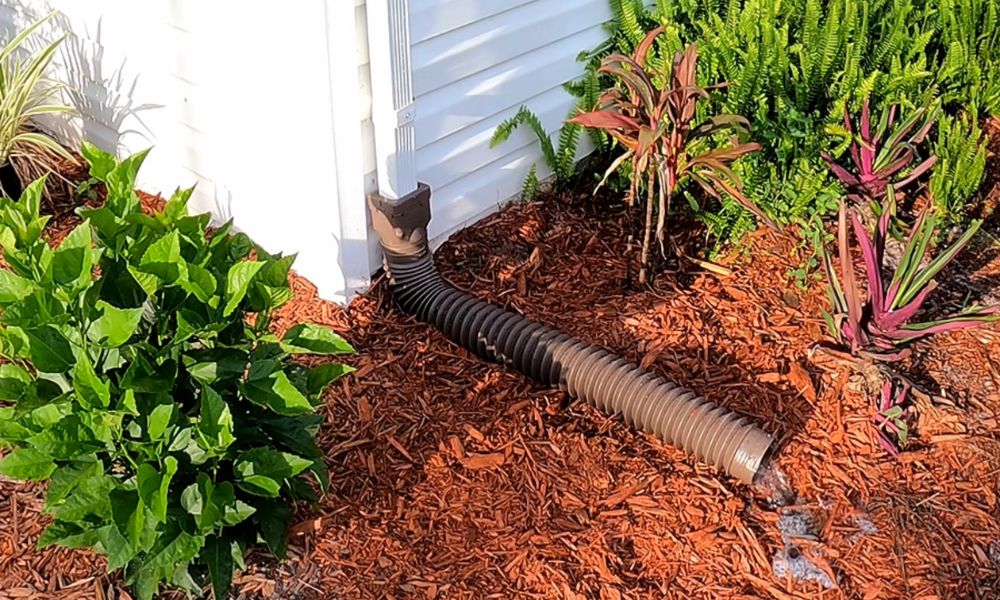
- Drier soil against the foundation. Less water pressing on basement and crawl space walls means less seepage through small cracks.
- Less erosion. A downspout that empties onto bare dirt digs a trench and carries mulch out of the flower bed.
- Less splashback. Water and mud bouncing off the ground keep the bottom of the siding wet.
- A cheap test. If a damp basement corner dries up after you add an extension, you’ve found where the water was coming from.
That last one is why I like them. Before anybody quotes you for waterproofing, a few dollars can show whether the problem is that simple.
What Gutter Extensions Cost
The part itself often costs less than lunch. Most of the price range comes down to material and who installs it.
| Option | Typical price |
|---|---|
| Basic extension, part only | $2 to $17 |
| Splash block, plastic to bronze | $6 to $85 |
| Splash block or extension added to a gutter job | $10 to $50 per downspout |
| Buried line, about 15 feet (my estimate) | About $95 to $255 before fittings and outlet |
The Problems Nobody Mentions at the Store
Most complaints I hear aren’t about the idea.
They’re about the part getting kicked, clogged or pointed the wrong way.
- Above-ground extensions trip people and get chewed up by mowers.
- Flexible corrugated tube catches leaves and grit in its ridges and clogs.
- In cold climates, a sagging extension holds water that freezes and blocks the next melt.
- An extension that runs even slightly uphill just moves the puddle a few feet.
- Water aimed at a driveway, sidewalk or the neighbor’s yard becomes somebody else’s problem.
- An unscrewed slip-on extension gets knocked loose, and nobody notices until the next storm.
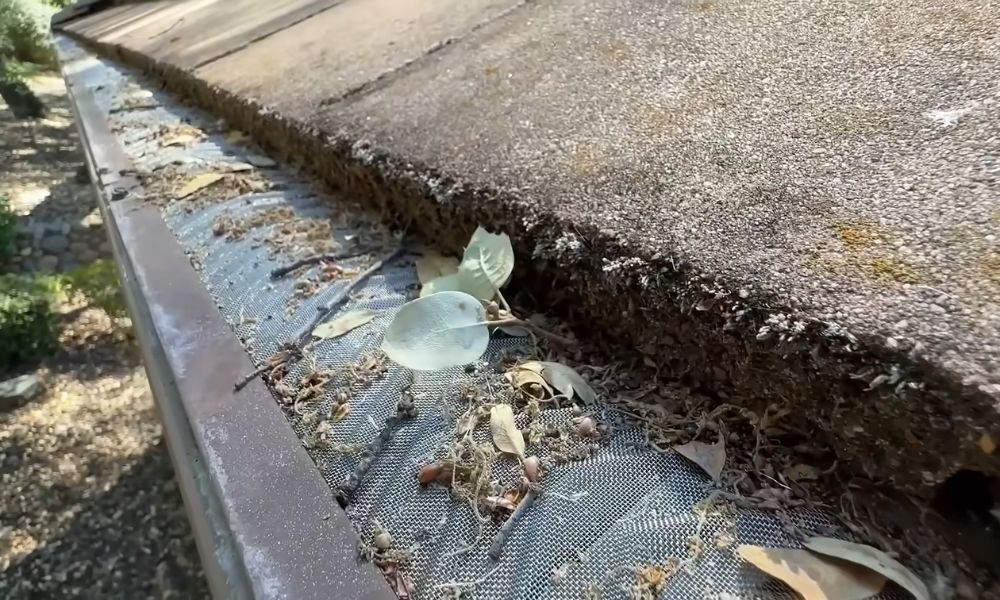
If debris is the constant headache, look upstream. The leaves in your extension came out of the gutter, and whether gutter guards are worth it depends a lot on the trees over your roof.
Which Type I’d Put Where
I’m practical about this, maybe a little cheap. I keep spare screws in coffee cans because I’m convinced I’ll need them someday, and I treat extensions the same way.
Start with the simplest thing that works.
- For open lawn, I like a rigid aluminum or vinyl extension, screwed to the downspout and ending on a splash block. It holds its slope and lasts.
- Next to a walkway or garage door, a roll-out or flip-up style that tucks out of the way between storms beats something people trip over in the dark.
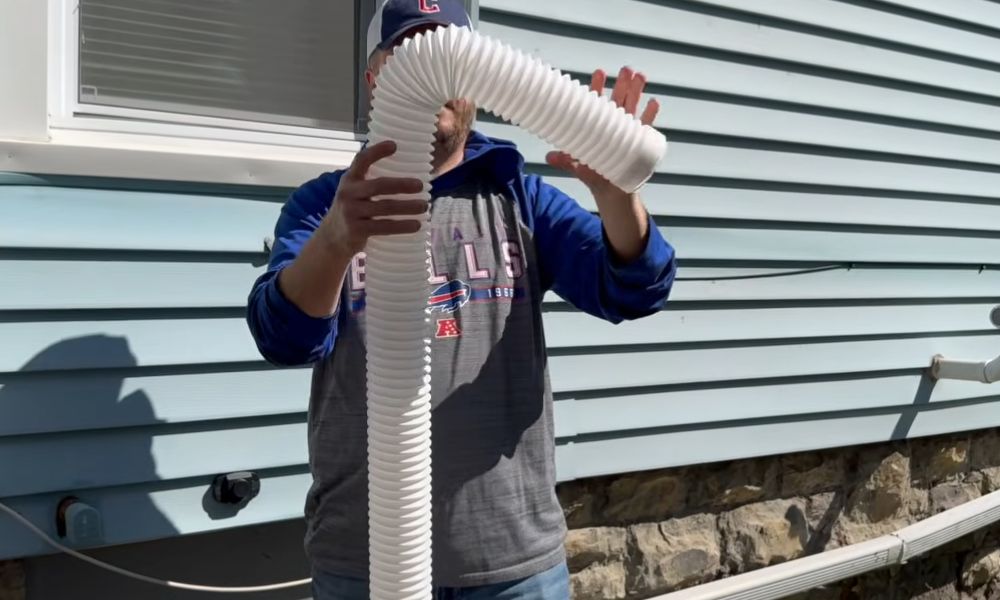
- Flexible tube is fine as a stopgap or to snake around a shrub, but I wouldn’t count on it for years.
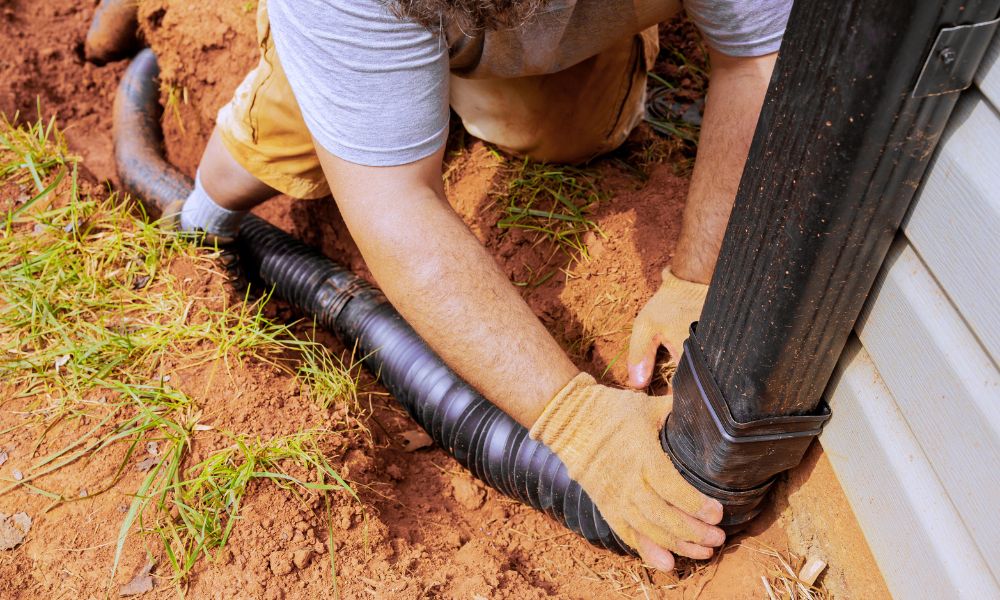
- If water has to cross a driveway or the yard gets mowed weekly, a buried line starts to make sense.
When an Extension Won’t Fix the Problem
Sometimes the extension isn’t the problem at all. If your yard slopes toward the house, water from a perfectly good 6-foot extension can turn around and roll right back to the wall.
If the gutter overflows at the front edge in a hard rain, the trouble is its size, pitch or outlet, and nothing on the ground fixes that.
Buried lines bring their own mistake, one every homeowner should know before anybody digs.
Never tie a downspout into the perforated drain pipe around your foundation. The same Department of Energy guidance calls for a separate, solid pipe sealed to the downspout and sloped away from the house, so roof water isn’t released where you’re trying to keep it out.
If water still gets inside after that, have someone look at it in person.
What You Can Handle Yourself
Above-ground extensions are one of the few gutter jobs I’m glad to see homeowners do.
If you want to see how a downspout extension is installed, this video from The Fixer 2 shows a practical example of directing rainwater away from a house.
You’re on the ground, and most of them slip over the downspout and hold with a couple of sheet metal screws. It’s a good small Saturday project with a cup of coffee and nobody up a ladder.
Then go out during the next real rain and watch where the water goes.
Ten minutes in a raincoat will tell you more than any article, including this one.
Digging is different. Federal pipeline safety regulators say to call 811 a few days before you dig, and the marking service is free.
If your downspout trouble turns out to be a gutter problem, remember that gutter work sends people to the ER every fall, and the ladder part can go to a pro.
Where I’d Start on Your House
On most houses, gutter extensions are worth it by a wide margin. A few dollars, or a few hundred, moves hundreds of gallons per storm away from the hardest part of the house to fix.
Start with the downspout nearest any damp corner, foundation crack or washed-out bed.
Screw on a rigid extension, set a splash block at the end and make sure the ground falls away from the wall.
Then walk the house in the next rain. My wife still says nobody asked when I point at downspouts from the car, but on your own house, you should be asking.

I’m Mike Carter, a roofing and gutter contractor who has spent most of my working life on roofs, up ladders and around job sites. I’ve worked with everything from asphalt shingles and metal roofing to flat roofs, flashing, fascia, gutters and drainage systems.
On Gutter N Roof, I share what I’ve learned from the years of experience, so homeowners can understand what’s happening above their heads and know when something needs attention.