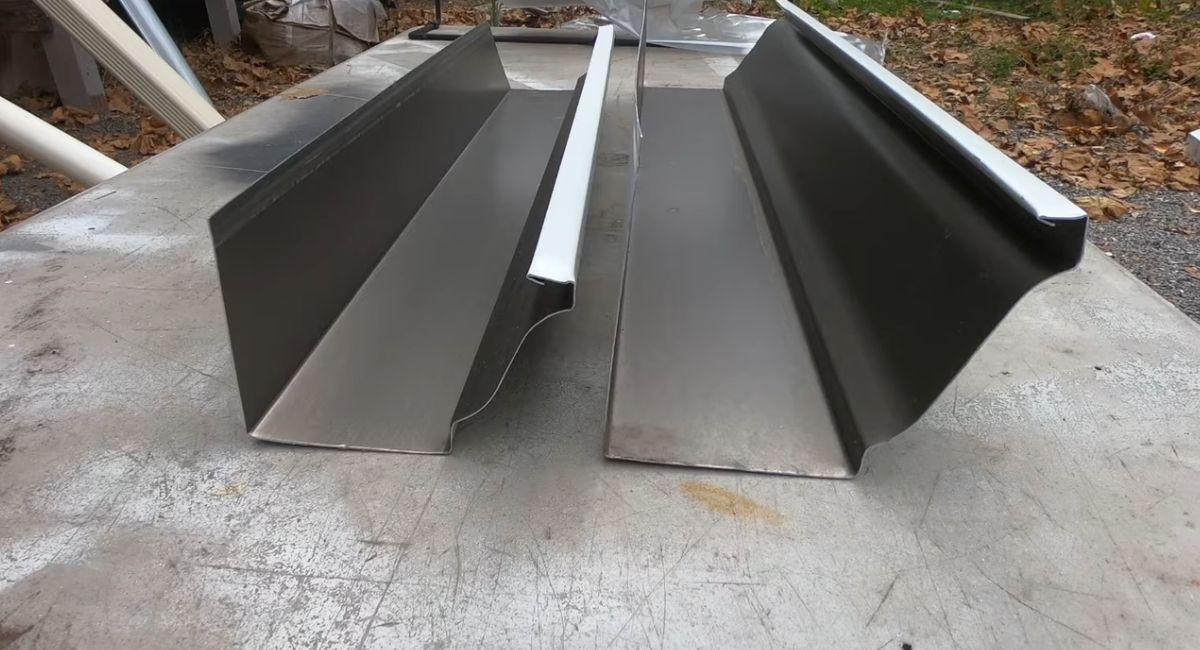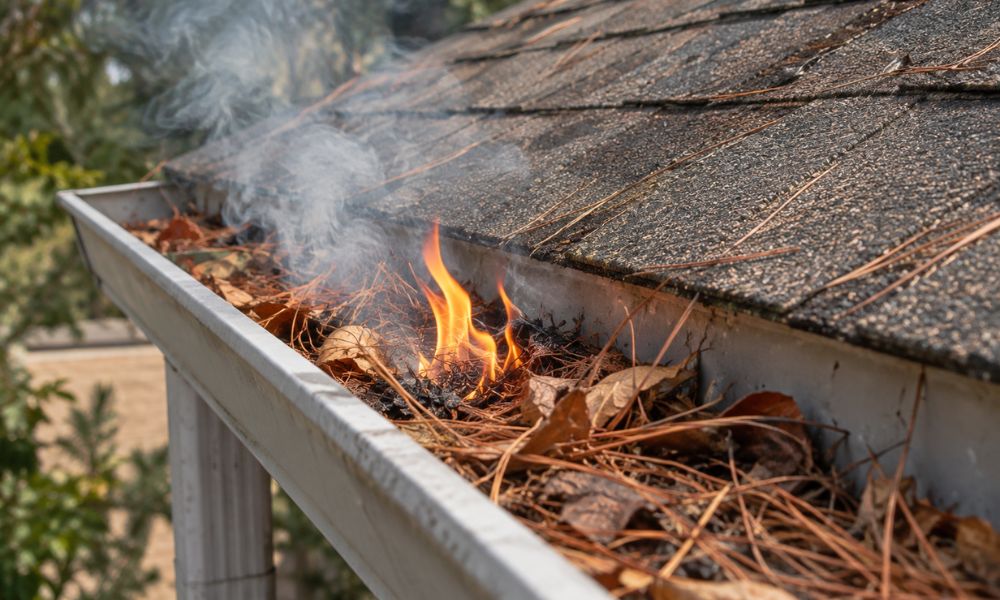

“Why does this gutter keep overflowing when I just cleaned it?” Homeowners ask me some version of that more than almost anything else. My answer starts with a rain jacket, because the best way to read a gutter is to stand under it in a real downpour and watch.
A clean gutter that still spills is telling you something useful. Leaves are off the list, so the trouble is in how the water moves, where it piles up, or where it is supposed to leave. Sometimes the problem is not the gutter at all.
Here is the order I check things in, starting from the ground.
Watch How the Water Leaves the Gutter

Before anybody touches a ladder, I want to know how the water gets out. A gutter that fills to the brim and spills is a different problem from one with room to spare while water sails past the front lip.
On a rainy Saturday, a cup of coffee and ten minutes at the window tell you more than a quick look on a dry afternoon. The spill pattern usually points to one of four causes.
- Water spills near the downspout first. Suspect a clog in the outlet, an elbow or a buried drain line.
- One low stretch overflows while the rest drains. Look at the hangers and the fascia board behind the gutter.
- Water pours over an inside corner. A roof valley is probably dumping there.
- Water clears the gutter entirely, or drips behind it. The gutter may hang too low or too far out.
This video explains why gutters can overflow during heavy rain, even when they are not clogged.
The Clog You Cannot See From the Ground
Clean gutters and clean downspouts are two different things. Most cleaning focuses on the trough, where you scoop out wet leaves packed solid, but the outlet hole, the first elbow and the bottom bend are where seeds, twigs and shingle grit knit into a plug.

If your downspouts feed underground pipe, the blockage can sit several feet under the lawn. A garden hose finds it faster than guessing.
Even on a single-story home, gutter cleaning can lead to serious injury. Having someone hold the ladder does not replace proper setup. If you cannot work safely, hire a qualified professional.
- Watch the outlet at ground level. A weak trickle means a partial clog.
- If water backs up, pull the bottom elbow and flush the downspout from below.
A Quarter Inch Every Ten Feet Makes the Difference
Gutters are not supposed to be level. They need a gentle fall toward each downspout, and the weatherization work specifications from the National Renewable Energy Laboratory call for at least 1/4 inch of slope for every 10 feet. On a 40-foot run, the far end should sit at least 1 inch higher than the outlet.
Over time, hangers loosen, fascia boards rot, and a section that started out right develops a belly. Water sits in that low spot, and in a hard rain it spills there long before it reaches the downspout.
Gutter pitch, also called fall, is the drop from the high end of a gutter run to its outlet. At 1/4 inch per 10 feet, the slope is too slight to judge from the yard. Standing water a full day after the rain stops is a far better sign that the pitch is off.
How Much Water One Roof Section Sends Down
Most people underestimate the volume. The U.S. Geological Survey puts one inch of rain on one acre at 27,154 gallons, or about 0.62 gallons per square foot of roof. I set it against the downspout sizing rule from Texas A&M AgriLife, which calls for 1 square inch of opening per 100 square feet of roof.
Porch roofs can make drainage even trickier when an upper roof or downspout sends extra water onto a small, shallow surface. That’s one reason porch roofing needs different attention than the main roof.
| Roof area to one downspout | Water per inch of rain | Opening needed | What fits |
|---|---|---|---|
| 400 sq ft | 250 gallons | 4 sq in | 2 x 3 inch |
| 600 sq ft | 374 gallons | 6 sq in | 2 x 3 inch, at its limit |
| 1,200 sq ft | 748 gallons | 12 sq in | 3 x 4 inch, at its limit |
| 1,500 sq ft | 935 gallons | 15 sq in | A second downspout |
Measure each roof section flat, length times width. The AgriLife rule comes from rain harvesting, so treat the table as a quick check.
One Downspout Trying to Do the Work of Two
A long run with a single outlet is one of the most common reasons a clean gutter overflows.
Every foot between the far end and the downspout is another foot the water has to travel while more keeps landing on it.

The homeowner gutter guide from Snohomish County, Washington suggests spacing downspouts 20 to 50 feet apart, limiting each to about 700 square feet of roof, and sending the water at least 10 feet from the foundation. Adding an outlet usually costs far less than replacing a run with bigger gutters, so I would try it first.
My wife has heard me say “that downspout should not end there” from the passenger seat more times than she would like. Water dumped at the corner of the house soaks the soil your gutters are supposed to protect, and a simple gutter extension often fixes it.
Valleys Pour More Water Into One Corner Than You Think
A valley is the channel where two roof slopes meet. Rain landing on both slopes near it gets funneled down that one line and reaches the gutter as a fast, concentrated stream instead of a thin sheet.
In a hard rain, that stream can hit the corner with enough speed to jump the front lip, even when the rest of the gutter is barely wet. No amount of cleaning changes it. Two fixes handle most valley corners.
- A valley splash guard, a short metal flap riveted to the front of the gutter at the corner, catches the stream and turns it back into the trough.
- A downspout placed close to the valley shortens the distance that extra water has to travel.
If neither one works, the gutter at that corner may be too small for what the valley sends. Price a larger section there before replacing the whole system.
Water Jumping Over the Front or Sneaking Behind
Some overflow is not overflow at all. If the gutter hangs too low, fast water off the shingles sails over it, while slow water clings to the drip edge and runs down the fascia behind it. Drip edge is the metal strip along the roof edge meant to lead water into the gutter.
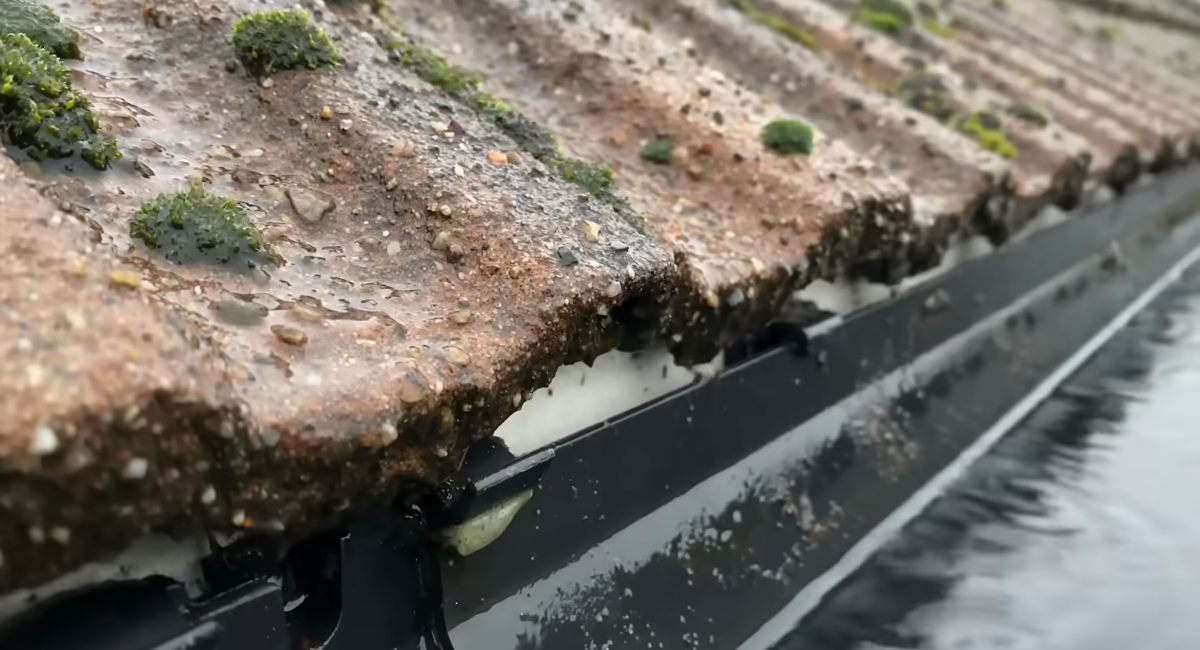
Steep roofs and smooth metal panels throw water faster, so they miss a low gutter more easily.
A Journal of Light Construction fix for a dripping gutter slips a strip of flashing under the drip edge so it overlaps the back of the gutter. I prefer that to sealant across the gap, a shortcut that rarely lasts.
Did you know? The same JLC piece says shingles can be cut flush with the drip edge or overhang it by 1/2 to 3/4 inch, and its author keeps the overhang to 1/4 inch in high-wind areas.
What to Check Yourself and What to Hand Off
Gutter guards confuse a lot of people here. A guard keeps leaves out, but pollen, seeds and shingle grit can mat on top of the mesh until rain sheets right over it.
That is why I never treat a gutter guard as a permanent fix. If you have one installed, my guide to cleaning leafless gutters explains what to watch for before trapped debris starts affecting drainage.
It also does nothing for pitch, valleys or downspout count, which I covered when I looked at whether gutter guards are worth it.
From the ground, you can safely check quite a bit yourself.
- Note exactly where and how the water spills during a real rain.
- Look for standing water a day after the rain stops.
- Listen for a downspout that goes quiet in a heavy storm.
- Check that every downspout discharges well away from the house.
- Scan the gutter line for dips, gaps at the fascia and dark streaks below joints.
This video shows common gutter leaks and explains how to identify problems before making repairs.
Rehanging, re-pitching, flashing work and anything above the first story belong to someone with the right equipment and a second person on the ground.
Start With the Cheapest Fix That Matches the Spill
The next time it pours, go outside and look at the exact spot where water leaves the gutter. Take a short video on your phone, because a contractor learns more from that clip than from a dry-day visit.
Then work through the fixes in order of cost. Flush the downspout, check the pitch, add an outlet or a valley splash guard, and pull the gutter up under the drip edge if water jumps it. Bigger gutters come last, only when the roof area says that run is truly overloaded. Plenty of overflowing gutters are the right size and simply drain through too few holes, a much smaller bill.
Before paying to replace the whole system, it helps to understand when K-style gutters are the right choice and how gutter width, downspout size, and roof layout affect drainage.

I’m Mike Carter, a roofing and gutter contractor who has spent most of my working life on roofs, up ladders and around job sites. I’ve worked with everything from asphalt shingles and metal roofing to flat roofs, flashing, fascia, gutters and drainage systems.
On Gutter N Roof, I share what I’ve learned from the years of experience, so homeowners can understand what’s happening above their heads and know when something needs attention.